Building a Unified Fleet Data API Gateway
Aug 26, 2026 Resolute Dynamics
Most fleets do not run one telematics system; they run several, and each one keeps its data behind its own login, its own API, and its own format. A unified fleet data API gateway solves this by putting a single, consistent interface in front of every vendor, so each vehicle looks the same to the systems that consume its data.
Instead of building and maintaining a separate connection to each provider, a fleet integrates once and gets clean, normalized data from all of them. This guide covers what the gateway does, the standards that help, and the design principles for building one.
The Problem: Telematics Data Trapped in Vendor Silos

The core problem is that each telematics vendor is a walled garden with its own format and access. A fleet running several brands has to reach each one separately, and none of them speak the same language.
Every provider reports to its own system. In heavy equipment, Caterpillar reports to VisionLink, Komatsu to KOMTRAX, John Deere to JDLink, and Volvo to CareTrack, and on-road telematics vendors are no different.
A fleet with equipment from four providers has to check four separate systems, each with its own login, its own interface, and its own way of formatting the same basic numbers. This does not scale: as the fleet grows into hundreds or thousands of assets, reconciling data across portals by hand becomes impossible.
What a Unified API Gateway Does
A unified fleet data API gateway sits between the fleet’s applications and every telematics vendor, handling the work of talking to each one. It presents one API outward while managing many different connections inward. Its responsibilities fall into six areas.
Single Entry Point and Routing
The gateway gives every application one place to ask for data. A dashboard or analytics tool calls the gateway, not each vendor, and the gateway routes the request to the right provider behind the scenes. Adding or removing a vendor changes nothing for the applications on top.
Authentication and Credential Management
The gateway holds and manages the credentials for every vendor. Each provider authenticates differently, and each set of credentials can expire or change. Centralizing this means one place to manage access, rather than scattering logins across every application that needs data.
Protocol and Format Translation
The gateway translates each vendor’s format into one the fleet uses. One provider may return JSON, another XML, and each structures its fields differently. The gateway converts them all into a single shape so nothing downstream has to know which vendor a reading came from.
Data Normalization to a Canonical Model
The gateway maps every vendor’s fields to one canonical data model. Engine hours, location, fuel, and fault codes mean the same thing whichever provider reports them, so the gateway writes them into shared field names with shared units. This is the step that makes cross-vendor reporting possible.
Vehicle and Equipment Matching
The gateway links each vendor’s records to the fleet’s own list of vehicles. A provider identifies a machine its own way, and the gateway matches that to the fleet’s asset identity so one vehicle is never counted as two. Reliable matching is what keeps the unified view accurate.
Rate Limiting, Caching, and Pagination
The gateway manages how it pulls data so it stays within each vendor’s limits. Providers cap how often they can be called and page their responses in ways that can produce apparent duplicates on a live feed. Handling rate limits, caching, and pagination in one place keeps the data clean and the connections healthy.
The Role of Standards Like ISO 15143-3
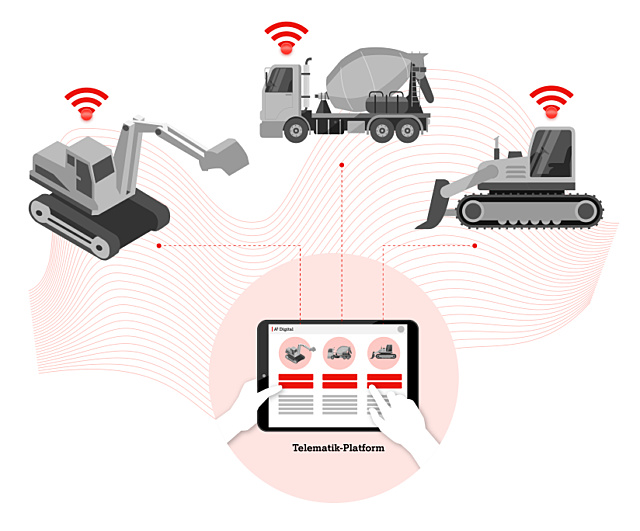
A shared standard reduces the translation work where vendors support it. The Association of Equipment Management Professionals introduced a telematics standard in 2010, later refined into the ISO 15143-3 standard, known as AEMP 2.0.
ISO 15143-3 defines a common format for key data such as location, operating hours, fuel, and fault codes, using the same field names and types across providers, which makes aggregation far easier. Most major equipment makers now expose an ISO 15143-3 or AEMP-compatible API.
The standard helps, but it does not remove the need for a gateway: providers still differ in authentication, available fields, refresh timing, subscriptions, and proprietary extensions, and much of general on-road telematics has no single universal standard at all. The gateway is what covers the gaps the standard leaves.
Design Principles for the Gateway
A durable gateway rests on four principles: model first, adapt per vendor, choose the right data flow, and design for change. Getting these right early avoids a rebuild as vendors are added.
Build the Canonical Data Model First
Start by defining the canonical model before writing a single connector. Decide what a unified vehicle record looks like, with shared fields and units, and make every vendor conform to it. Building connectors first, without a target model, leads to a tangle that is hard to unify later.
Use Per-Vendor Adapters
Give each vendor its own adapter that maps its API to the canonical model. Isolating vendor-specific logic in one place means a change from one provider only touches its adapter, not the whole system. This keeps the gateway maintainable as the list of vendors grows.
Choose Polling or Webhooks per Vendor
Match the data flow to what each vendor supports. Some providers push updates through webhooks, while others require polling on a schedule. Choosing the right method per vendor keeps data current without exceeding rate limits or missing updates.
Design for Change and Failure
Assume vendor APIs, credentials, and fields will change, and build to notice when they do. The hard part of integration is not the first connection but keeping it accurate and reliable over time. Monitoring each connection and alerting on failures keeps a quiet break from corrupting the unified data.
What a Unified Gateway Delivers
A unified gateway turns many fragmented feeds into one dependable data layer. The practical payoff is that the fleet builds on one clean source instead of many messy ones.
With the gateway in place, dashboards, alerts, and analytics work across the entire fleet regardless of vendor, and a fleet can add or drop a provider without rewriting its applications.
It creates the real-time fleet telematics layer that a single, vendor-agnostic view depends on, and it lets the teams doing dispatch, maintenance, and planning work from the same normalized dataset rather than reconciling separate systems.
Implementation Roadmap

Building the gateway works best in stages, starting from the model and adding vendors one at a time. A staged rollout proves the design before it scales.
- Define the canonical data model that every vendor will map into.
- Build the gateway core with routing, authentication, and normalization.
- Add one vendor adapter and validate its data end to end.
- Onboard remaining vendors one at a time, reusing the same pattern.
- Add monitoring so broken connections are caught early.
Frequently Asked Questions
What is a unified fleet data API gateway?
A unified fleet data API gateway is a single interface that sits in front of multiple telematics vendors and delivers their data in one consistent format. Applications call the gateway instead of each provider. It handles authentication, translation, and normalization so every vehicle looks the same downstream.
Why not just use each vendor’s API directly?
Using each API directly means maintaining a separate integration for every vendor, each with its own format, login, and quirks. This does not scale as the fleet grows and breaks whenever a provider changes its API. A gateway centralizes that work into one place.
Does ISO 15143-3 remove the need for a gateway?
No, ISO 15143-3 reduces translation work but does not remove it. The standard gives a common format where vendors support it, yet providers still differ in authentication, fields, and refresh timing, and much on-road telematics has no shared standard. The gateway covers those gaps.
What is the hardest part of building the gateway?
The hardest part is keeping data accurate and reliable as vendor APIs and credentials change, not making the first connection. Fields shift, credentials expire, and refresh timing varies. Designing per-vendor adapters and monitoring each connection is what keeps the gateway dependable.
What should you build first?
Build the canonical data model first, before any connector. Defining the unified vehicle record up front gives every vendor adapter a clear target. Building connectors without that model leads to inconsistent data that is hard to unify later.