Building Vehicle Digital Twins from Fleet Sensor Data
Aug 20, 2026 Resolute Dynamics
A vehicle digital twin is a continuously-synchronized virtual replica of a physical vehicle, built from live sensor data and updated every time the vehicle’s condition changes. For fleet technology leaders, a twin turns raw telematics into a working model that predicts failures and tests decisions before they reach the road.
At Resolute Dynamics, we see the twin as the destination for the data our systems capture. This guide explains what a vehicle digital twin is, what fleet sensor data feeds it, how it is built, and what it lets a fleet do.
What Is a Vehicle Digital Twin?
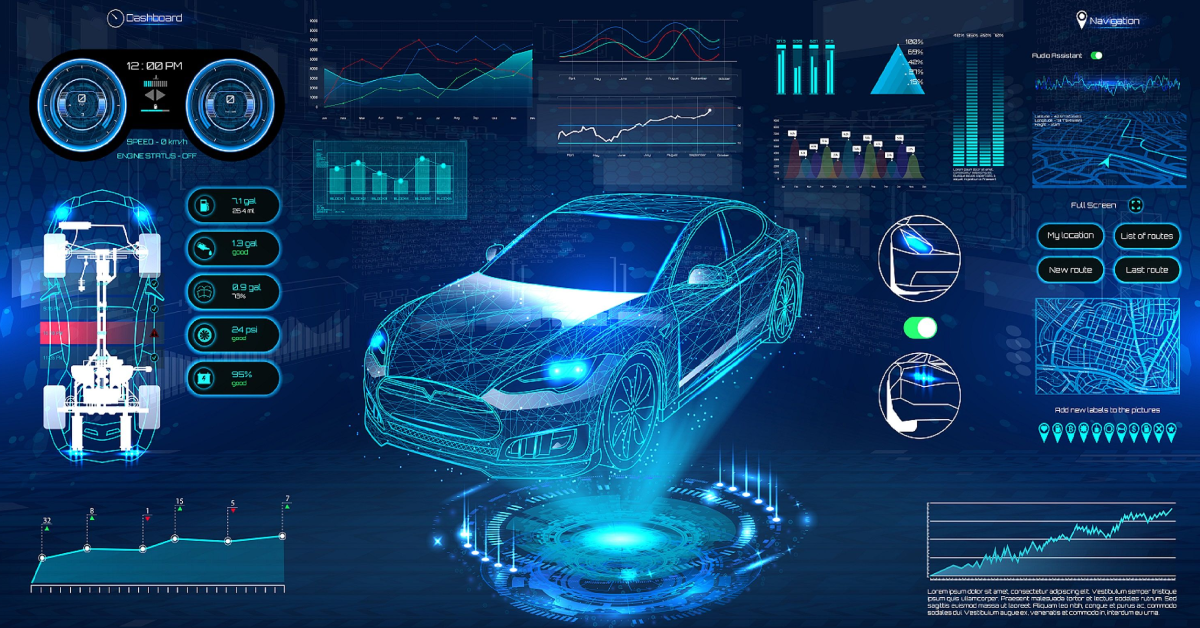
A vehicle digital twin is a virtual model of a real vehicle that stays in sync with the physical asset through a constant feed of sensor data. It combines that live feed with the vehicle’s maintenance history, its usage patterns, and its manufacturer specifications to mirror the exact state of the vehicle at any moment. Unlike a static vehicle record, the twin changes as the vehicle changes.
Digital Twin vs a Dashboard
A digital twin and a dashboard answer different questions. A dashboard shows what already happened, while a digital twin runs forward-looking simulations of what will happen and what changes when a variable is adjusted. A dashboard reports last week’s fuel use; a twin models how a worn injector will affect that fuel use next month. This forward view is what separates a twin from ordinary reporting.
The Three Levels of Digital Twins
Digital twins exist at three levels, from the smallest part to the whole fleet:
- Component twin models a single part, such as a brake or a battery.
- Vehicle twin models one complete vehicle and all its systems.
- Fleet twin models the whole fleet together for planning across assets.
A fleet program usually builds up from component twins, because accurate parts make an accurate vehicle, and accurate vehicles make a useful fleet view.
What Fleet Sensor Data Feeds a Digital Twin?
A vehicle digital twin draws on four data sources: live sensor streams, maintenance history, usage telemetry, and manufacturer specifications. Each source fills a gap the others cannot, and together they let the twin reflect both the current state and the expected behavior of the vehicle.
Real-Time Sensor Streams
The live layer comes from onboard sensors reading engine temperature, vibration, fuel pressure, tire pressure, battery health, and GPS position. This stream is the heartbeat of the twin, because it carries the moment-to-moment condition of the vehicle. Our GPS Tracking Systems supply the location and motion part of this stream, tagged with precise time.
Historical Maintenance Records
Maintenance history gives the twin a memory of past repairs, part replacements, and service intervals. This record tells the model what has already worn out and what was recently renewed, which sharpens its predictions. A twin without history treats a new part and an old one the same way.
Usage Telemetry and Manufacturer Specifications
Usage telemetry describes how hard and how often the vehicle works, while manufacturer specifications set the baseline for normal. Together they let the twin judge whether a reading is expected for this vehicle’s duty cycle or a sign of trouble. A truck on constant heavy haul and one on light delivery wear differently, and the twin accounts for that.
How to Build a Vehicle Digital Twin from Sensor Data
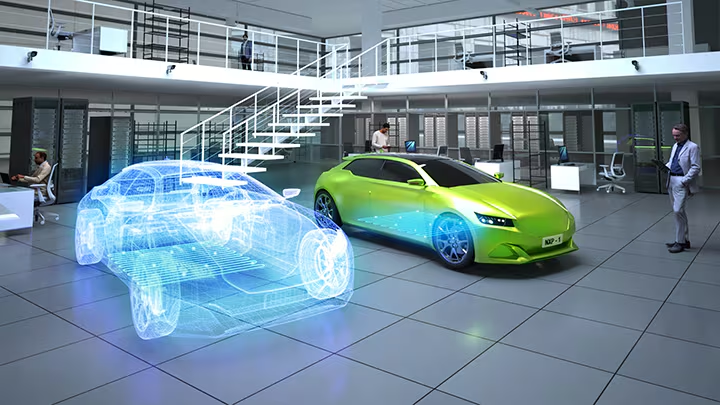
Building a vehicle digital twin runs through five stages: collect, integrate, model, synchronize, and simulate. Each stage transforms the data further, moving it from raw signals on the vehicle to a working model that a fleet can question.
Stage 1: Collect Data from In-Vehicle Sensors
The first stage gathers on-board sensor data, much of it communicated over the vehicle CAN network. Sensors read the vehicle’s systems, and the telematics device forwards those readings. The choice of what to sample and how often shapes everything downstream, which is why the capture strategy matters as much as the sensors themselves.
Stage 2: Integrate the Data on a Central Platform
The second stage brings every vehicle’s data into one platform and structures it so the model can use it. This is where readings from different vehicles and different protocols are normalized into a consistent form. Without this step, a mixed fleet produces data the model cannot compare.
Stage 3: Build the Virtual Model
The third stage turns the structured data into a virtual model of the vehicle and its parts. At the component level, the model produces a component scalar, a relative indicator of a part’s condition derived from its sensor data. When a sensor reading looks abnormal, the model can estimate the true value so the twin stays reliable even with imperfect inputs.
Stage 4: Keep the Twin Synchronized
The fourth stage feeds live data into the model continuously so the twin matches the real vehicle. The twin is only useful if it reflects the current state, so synchronization never stops. How often the data arrives depends on the capture strategy, which balances event-driven and continuous data capture to keep the twin current without wasting bandwidth.
Stage 5: Add the Simulation and Analysis Layer
The fifth stage lets the fleet ask the twin questions and run scenarios. This layer uses the model to predict wear, estimate failure windows, and test what happens under different conditions. It is the stage that converts a mirror of the vehicle into a tool for decisions.
What a Vehicle Digital Twin Lets a Fleet Do
A vehicle digital twin gives a fleet three core capabilities: predictive maintenance, scenario simulation, and mixed-fleet planning. These move a fleet from reacting to problems toward preventing them.
Predictive Maintenance Evaluated per Vehicle
Predictive maintenance with a twin judges each vehicle against its own real operating conditions rather than one fixed schedule. Two trucks running the same route can wear differently, and the twin treats them as individuals. It reviews historical and current data to predict component wear and flag a problem before it becomes a breakdown, which cuts unplanned downtime.
Simulation and What-If Testing
Simulation lets a fleet test a decision in the virtual model before acting on the physical vehicle. Instead of guessing what happens if a part is left in service another month, the fleet runs the scenario. The twin also models the wider effect: what happens to the rest of the fleet if this component fails now, and which intervention works best.
Mixed-Fleet Planning
For mixed fleets, a twin tracks EV battery degradation and sets condition-based replacement timing for combustion vehicles. It plans around the real condition of each asset rather than its age alone. This helps a fleet decide when to retire, replace, or reassign a vehicle based on evidence instead of a calendar.
Why Data Capture Quality Decides Twin Quality
A digital twin is only as accurate as the sensor data feeding it, so the capture layer has to come first. Gaps, noise, or inconsistent data produce a twin that misleads rather than guides. Getting the foundation right is the difference between a model a fleet trusts and one it ignores.
The Role of a Solid Capture Foundation
A dependable twin rests on a capture architecture that reads every vehicle and normalizes the data into one form. This is the job of a well-designed vehicle data capture architecture, which ingests signals from mixed makes, models, and protocols and delivers clean, comparable records. The twin sits on top of that foundation and depends on it completely.
Digital Twins Across a Heterogeneous Fleet
Building twins across a mixed fleet requires normalizing data from different vehicle classes and protocols before any vehicle can be modeled consistently. A light van, a heavy truck, and an electric vehicle report different signals in different formats, and the twin program needs them expressed in a shared way.
Handling Different Vehicle Classes and EVs
Handling a mixed fleet means mapping each vehicle’s signals to a common model, including the battery data that EVs report. Once the data is normalized, the same modeling approach works across the fleet, and the fleet twin can compare very different vehicles fairly. This reflects the kind of engineering behind our R&D projects, where mixed-fleet data has to become one consistent picture.
How to Start Building Fleet Digital Twins
A fleet starts building twins by auditing its data, running a pilot, and then scaling to the wider fleet. Starting small proves the value and surfaces data gaps before a large investment.
- Audit the data to confirm which sensors and records are already available on each vehicle class.
- Choose a pilot group of vehicles where downtime is costly and data is good.
- Build component and vehicle twins for that group and validate them against real outcomes.
- Scale across the fleet once the pilot twins prove accurate.
Challenges and Considerations
Three challenges decide whether a twin program succeeds: data quality, model fidelity, and security. Each one needs a plan before the fleet commits.
Data Quality and Coverage
Data quality is the first hurdle, because missing or noisy data weakens the model. A twin needs consistent coverage across the vehicle and across time. Fleets that fix capture gaps early avoid building on a shaky base.
Model Fidelity and Validation
Model fidelity is how closely the twin matches reality, and it has to be checked against real outcomes. A twin that predicts failures that never come, or misses ones that do, loses trust fast. Validating the model against actual events keeps it honest.
Data Security and Privacy
Security matters because twins hold detailed data on vehicles, routes, and behavior. This data has to be protected in transit and at rest, with access controlled and retention defined. For fleets in the UAE and the wider GCC, the program also follows local data-handling rules.
Frequently Asked Questions
What is a vehicle digital twin in simple terms?
A vehicle digital twin is a living virtual copy of a real vehicle that updates from the vehicle’s sensors. It shows the current condition of the vehicle and predicts what will happen next. Think of it as a model that stays in step with the physical asset instead of a static record.
What sensor data do you need to build a fleet digital twin?
A fleet digital twin needs live sensor streams plus maintenance history, usage telemetry, and manufacturer specifications. The live streams commonly include engine temperature, vibration, fuel and tire pressure, battery health, and GPS position. The other three sources give the model memory, context, and a baseline for normal.
How is a digital twin different from a fleet dashboard?
A dashboard reports what already happened, while a digital twin simulates what will happen and how outcomes change when a variable is adjusted. A dashboard is a rear-view mirror; a twin is a forecast. Both are useful, but only the twin looks forward.
Can you build a digital twin for a mixed fleet with EVs?
Yes, a mixed fleet twin works once the data from every vehicle class is normalized into one model. The program maps different protocols and signals, including EV battery data, into a shared form. The twin can then plan EV battery replacement and combustion-vehicle servicing side by side.
Do digital twins replace predictive maintenance?
No, a digital twin extends predictive maintenance rather than replacing it. Predictive maintenance tells a fleet when a part will fail; the twin adds what happens to the rest of the fleet if it does and tests the best response. The twin makes predictive maintenance part of a wider planning tool.