Designing Telematics Systems for Connectivity Failures
Aug 28, 2026 Resolute Dynamics
Vehicles drive through tunnels, remote dead zones, congested cells, and the occasional carrier outage, which means telematics connectivity will fail at some point on every route. A resilient telematics system is designed so that a dropped connection never turns into lost data or a blind fleet.
Two mechanisms make that possible: keeping the vehicle online when one path fails, and protecting the data on the vehicle when no path is available at all. This guide covers both, and the design principles that hold a fleet together when the network does not.
The Two Goals of a Resilient Design
Resilient telematics design has two separate goals: stay connected, and never lose data. They call for different mechanisms, and a strong design uses both rather than treating one as a substitute for the other.
Failover keeps a device online by switching to another connection when the first one fails. Store-and-forward protects the data itself by saving it locally until connectivity returns. Failover handles the cases where another network is available; store-and-forward handles the cases where none is.
A system that only fails over still loses data in a true dead zone, and a system that only buffers still goes dark when it could have stayed online. Designing for both closes the gap.
Failover: Keeping the Vehicle Online
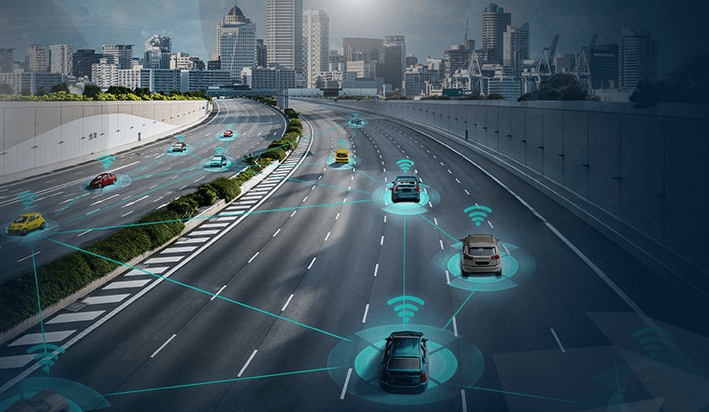
Failover keeps a vehicle connected by switching to a backup path the moment the primary one degrades. The backup can be another mobile network, a satellite link, or a second connection, and the switch should happen automatically without anyone touching the vehicle.
Multi-Network SIMs
The core of vehicle failover is a SIM that can use more than one carrier. Multi-network and eSIM solutions carry several carrier profiles and fall back from a failing one to another, often without contacting a remote server. When one network has no coverage in an area, the device moves to a carrier that does, which matters most for fleets that cross regions and borders.
Independence: Avoiding a Shared Failure Domain
A backup only helps if it fails independently of the thing it is protecting against. Two connections that share the same mast, the same cabling, or the same carrier core can go down together, which makes them redundant in name only. Real redundancy means independence across carrier networks, so a single carrier outage cannot take the whole fleet offline at once.
Automatic Detection and Switching
Failover has to be automatic and based on real link quality. The system monitors signal strength, latency, and packet loss, and switches when they cross a threshold, ideally before the link fully drops. Stronger designs watch actual data throughput rather than signal alone, since a device can show a good signal while no data is getting through.
Satellite and Extra Paths for Remote Areas
For routes beyond cellular coverage, satellite provides a path where no carrier reaches. Fleets operating in remote or cross-country areas add satellite or additional links so a vehicle keeps reporting where mobile networks simply do not exist. The design matches the backup to the real coverage risk on each route.
Store-and-Forward: Protecting Data When Everything Is Offline
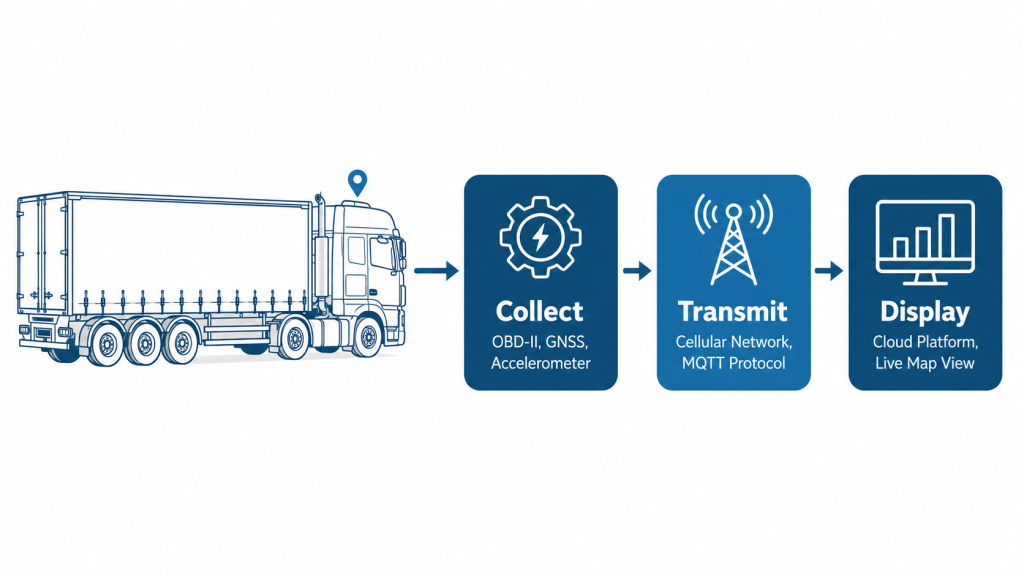
Store-and-forward protects data by saving readings on the vehicle and sending them once a connection returns. When every network path is unavailable, this is what keeps the record complete rather than leaving a hole.
Local Buffering and Queuing
The device queues its data in local storage during an outage and transmits it on reconnect. Locations, events, and even images or clips are held rather than dropped, so a tunnel or a dead zone becomes a delay instead of a gap. This preserves the value of the deployment through interruptions the network cannot avoid.
Timestamps and Ordering on Reconnect
Buffered data has to arrive with its original time and in the right order. Each record keeps the timestamp of when it happened, not when it was finally sent, so a burst of delayed data does not look like a burst of current activity. Correct ordering lets the platform reconstruct the trip exactly as it occurred.
Handling Storage Limits
A buffer is finite, so the design must decide what happens when storage fills. A fleet defines how much data each device retains and which data to keep first when space runs low, prioritizing safety and compliance records over routine updates. Planning this in advance prevents an outage from quietly overwriting the data that mattered most.
Edge Processing During Outages
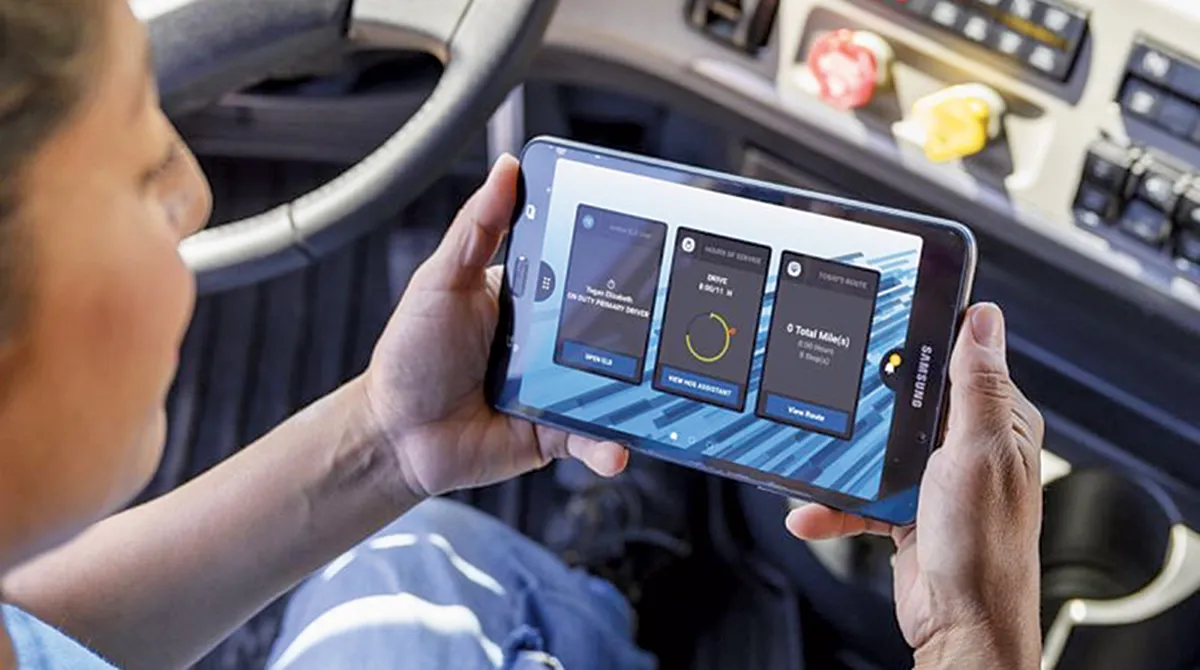
Edge processing keeps a vehicle useful even while it is cut off from the platform. Because the device can run logic locally, it does not have to wait for the cloud to react.
During an outage, the device continues to detect events, raise in-cab alerts, and make time-critical decisions on its own, then syncs the results when the connection returns.
This means a safety warning still fires the instant it is needed, rather than being delayed until the vehicle is back online. Local intelligence turns connectivity from a requirement into a convenience for anything that must happen immediately.
Monitoring and Self-Recovery
A resilient system detects and recovers from connectivity failures without waiting for a person. Most failures follow repeatable patterns, which means the system can be built to handle them on its own.
Automated failover and buffering do the recovery, while monitoring tells the fleet what happened and why. A connected fleet telematics platform that also sees connectivity data can correlate a gap in a vehicle’s reports with a network event, which distinguishes a vehicle that went silent because its device failed from one that went silent because it lost coverage.
That distinction saves a fleet from chasing a hardware problem that was really a dead zone, and the reverse.
Design Principles Checklist
A resilient telematics design comes together around a few clear rules. Applying them from the start is far easier than retrofitting resilience after data has already been lost.
- Plan for both outcomes: use failover to stay online and store-and-forward to protect data offline.
- Design for independence: make backup paths fail separately from the primary, across carriers.
- Switch automatically: detect degradation and fail over before the link fully drops.
- Preserve timestamps: send buffered data with its original time and order.
- Prioritize under pressure: keep the most important data when storage or bandwidth is limited.
- Monitor the gaps: correlate missing data with connectivity events to find the real cause.
Frequently Asked Questions
What is the difference between failover and store-and-forward?
Failover keeps a device online by switching to another connection, while store-and-forward saves data locally until connectivity returns. Failover handles cases where a backup network exists; store-and-forward handles cases where none does. A resilient telematics system uses both.
How do fleets stay connected across coverage gaps?
Fleets stay connected using multi-network SIMs that switch between carriers automatically, plus satellite for areas beyond cellular reach. The system detects a failing link and moves to a working one, ideally before the connection fully drops. Independence across carriers is what makes this reliable.
What happens to telematics data during an outage?
During an outage, a well-designed device buffers its data locally and sends it when the connection returns. Records keep their original timestamps so the trip can be reconstructed accurately. This turns a coverage gap into a short delay rather than lost data.
Why does carrier independence matter for redundancy?
Independence matters because two connections sharing the same mast or carrier core can fail together. A single-carrier backup often lives in the same failure domain as the primary, so it offers little real protection. True redundancy spreads across independent carrier networks.
How can a fleet tell a device fault from a coverage gap?
A fleet tells them apart by correlating missing data with connectivity events. When a platform can see network status alongside telematics reports, a silent vehicle in a known dead zone reads as a coverage gap, while a silent vehicle with good coverage points to a device fault. This targets the fix correctly.