Driver Biometric Data Capture for Fleet Safety
Aug 24, 2026 Resolute Dynamics
Driver biometric data capture uses a driver’s physical and physiological signals, such as eye movement, facial cues, and heart rate, to catch fatigue and distraction before they cause a crash. It is one of the most effective tools in fleet safety and, at the same time, one of the most sensitive kinds of data a fleet can hold.
That combination is the whole story: the safety case is strong, and the ethical and legal duties that come with it are just as real. This guide covers the use cases, the ethics, and the compliance rules a fleet needs to weigh before pointing a sensor at a driver.
Use Cases for Driver Biometric Data in Fleet Safety
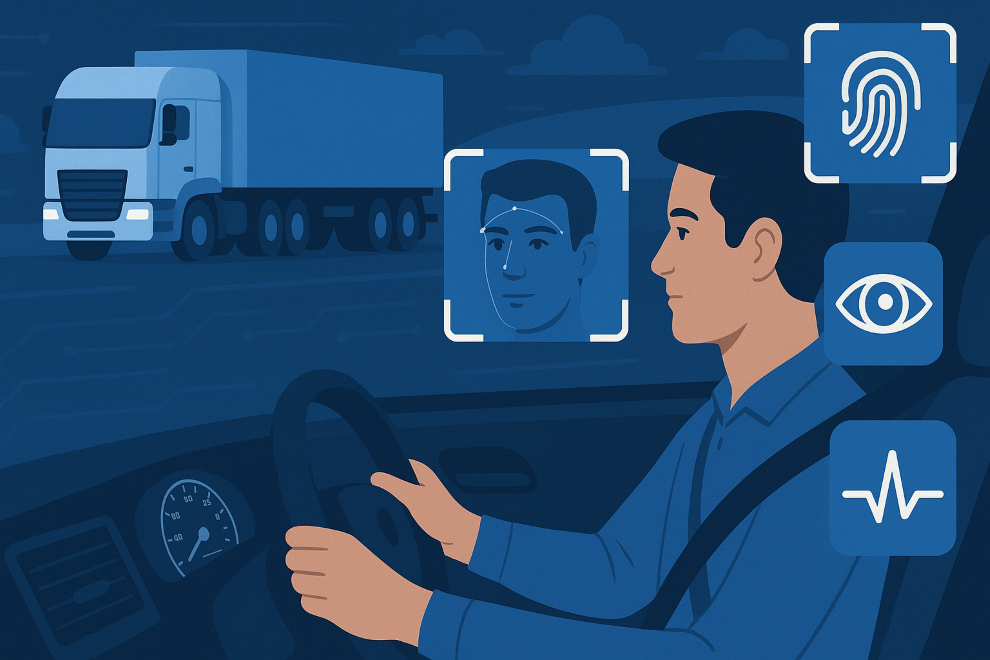
Driver biometrics support four main safety use cases: fatigue detection, distraction detection, driver identification, and physiological monitoring. Each targets a human risk factor that vehicle sensors alone cannot see.
Fatigue and Drowsiness Detection
Fatigue detection is the most common use, and it works by reading the driver’s eyes and face. A driver monitoring system uses a driver-facing camera, often infrared, to track eye closure, blink patterns, yawning, gaze, and head position, and flags the signs of drowsiness in real time.
When it detects a microsleep or a lapse in attention, it warns the driver with an audible, visual, or haptic alert such as a seat vibration. Some systems add physiological sensors like heart rate to sharpen the read.
Distraction Detection
Distraction detection watches where the driver’s attention actually is. The same camera and models that catch fatigue also detect a driver looking away from the road, using a phone, eating, or driving unbuckled. Because these are discrete risky moments, the system flags each one so a fleet can coach the behavior before it leads to a collision.
Driver Identification and Authentication
Driver identification confirms who is behind the wheel. This comes in two forms with very different privacy weights: verification, a one-to-one check that the driver is who they claim, and identification, a one-to-many search against a database. Verification, such as a fingerprint to start a vehicle, is far narrower than scanning a face against many stored identities, and the two are treated very differently in law.
Physiological and Health-State Monitoring
Physiological monitoring reads bodily signals such as heart rate or skin conductance to assess a driver’s state. It can add context that a camera misses, but it is also the most intrusive category, because it edges into health data. A fleet should treat this use case with the most caution of all.
The Ethics of Capturing Driver Biometrics
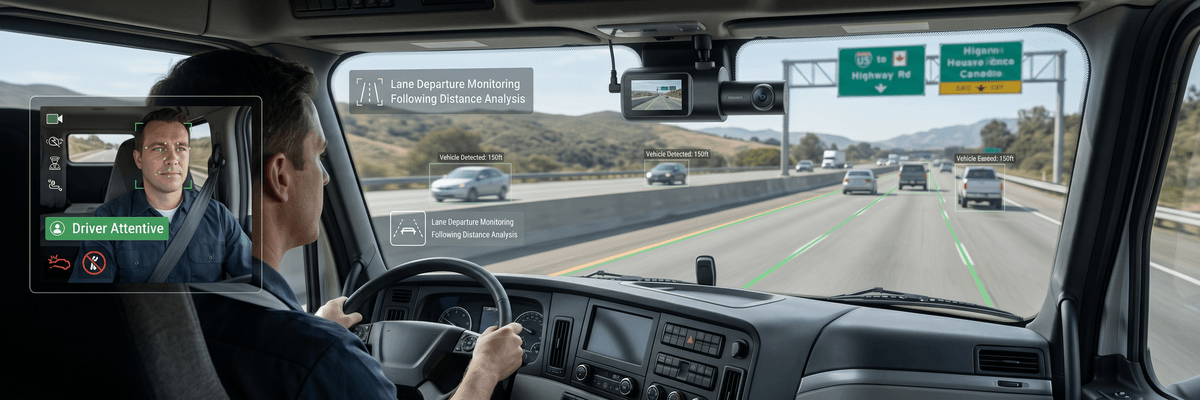
The ethics of driver biometrics come down to one question: is this the least intrusive way to reach a genuine safety goal? A camera pointed at a person’s face all day is a serious step, and the safety benefit has to justify it in practice, not just in theory.
Consent and the Power Imbalance
Consent is complicated by the fact that a driver works for the fleet. A worker asked to agree to monitoring by their employer is not in a free position to say no, which is why regulators doubt that workplace consent is truly voluntary. A fleet should not lean on consent alone; it should be able to justify the monitoring on its own merits.
Proportionality and Data Minimization
Proportionality means capturing only what the safety goal requires and nothing more. If a fatigue system only needs to know that eyes are closing, it does not need to store hours of a driver’s face. Processing the signal on the device and keeping only safety events, rather than a continuous recording, is both more ethical and easier to defend.
Transparency and Driver Trust
Transparency means drivers know exactly what is captured, why, and who sees it. Systems land far better when drivers understand the tool protects them, including by clearing them when data shows they were not at fault in an incident. Hidden or vaguely explained monitoring erodes trust and invites resistance.
Guarding Against Function Creep
Function creep is the risk that safety data quietly becomes surveillance data. Biometric data gathered to prevent crashes should not drift into performance scoring, discipline unrelated to safety, or tracking that outlives its purpose.
Processing biometrics on the device and integrating only the safety outcome into a broader data capture platform keeps the raw, sensitive data contained and the purpose clear.
Compliance Requirements
Compliance for driver biometrics is strict, because most privacy laws treat biometric data as a protected special category. The exact rules vary by country and are changing quickly, so the sections below are general guidance, not legal advice; a fleet should confirm its position with qualified counsel and its data protection officer.
GDPR: Biometric Data as Special Category
Under the GDPR, biometric data used to uniquely identify a person is special category data, the highest protection tier. Processing it is generally prohibited unless the person gives explicit consent or another Article 9 condition applies, and high-risk processing requires a data protection impact assessment.
Individuals also keep the right to access, correct, and erase the data. Fatigue and emotion systems can be a grey area, since they do not always identify a person, but where they infer a health or mental state or build a facial profile over time, the safest course is to assume these protections apply.
EU AI Act: The Workplace Emotion-Recognition Rule
The EU AI Act prohibits using AI to infer emotions in the workplace, with a narrow carve-out for genuine safety reasons. Driver-fatigue detection is cited as an example of that safety exception, which is why the technology can still be used, but the exception is narrow and the safety purpose must be real and documented.
The prohibition carries penalties of up to €35 million or 7% of global turnover, and meeting the AI Act does not remove the separate GDPR duties above.
BIPA, CCPA, and US Frameworks
In the United States, state laws like Illinois BIPA and California CCPA set their own biometric rules. These impose consent requirements, retention limits, and data-subject rights, and BIPA in particular is known for strong enforcement. A fleet operating across states has to meet the rules of each one where its drivers work.
UAE and GCC Data Protection
For fleets in the UAE and the wider GCC, biometric capture falls under regional data-protection law and local consent and handling rules. The principles echo the global ones: a lawful basis, transparency, security, and limits on retention. A fleet should map its program to the specific requirements of each country it operates in.
Building a Compliant Biometric Capture Program
A defensible program starts from purpose and works outward. Define the specific safety problem, choose the least intrusive technology that solves it, and build the safeguards in from the start rather than bolting them on.
- Set a clear, narrow purpose: name the safety goal and capture only the data that serves it.
- Run a data protection impact assessment: document the risk, the necessity, and the safeguards before deployment.
- Process on the device: keep raw biometric data on the vehicle and share only the safety event.
- Be transparent with drivers: explain what is captured, why, and how it protects them.
- Limit retention and access: hold data only as long as needed and restrict who can see it.
- Review against current law: revisit the program as regulations evolve, especially the AI Act and regional rules.
Frequently Asked Questions
What counts as driver biometric data?
Driver biometric data is information from a driver’s physical or physiological traits, such as facial images, eye movement, fingerprints, or heart rate. In fleet safety it is used mainly to detect fatigue and distraction. Because it can identify a person or reveal their state, most privacy laws treat it as highly sensitive.
Is driver fatigue monitoring legal under the EU AI Act?
Driver-fatigue detection can be lawful under a narrow safety carve-out to the AI Act’s ban on workplace emotion recognition. The safety purpose must be genuine and documented, and the system still has to meet GDPR duties around consent, impact assessment, and data protection. This is a complex area where legal advice is essential.
Can a fleet rely on driver consent for biometric capture?
A fleet should not rely on consent alone, because a driver’s agreement to employer monitoring may not count as freely given. Regulators view the employer-worker relationship as an imbalance of power. The monitoring should be justifiable on safety grounds, with consent as one part of a wider legal basis.
How can a fleet capture biometrics more ethically?
Capture ethically by taking the least intrusive path: process on the device, keep only safety events, and be open with drivers. Avoid storing continuous recordings or using safety data for unrelated purposes. Proportionality and transparency are the core of an ethical program.
What is the difference between driver verification and identification?
Verification is a one-to-one check that a driver is who they claim, while identification is a one-to-many search against a database. Verification, like a fingerprint to start a vehicle, is far narrower and less risky than scanning a face against many stored identities, and the law treats the two very differently.