Event Streaming vs Batch for Fleet Data Pipelines
Sep 28, 2026 Resolute Dynamics
Fleet data has two jobs, and they pull in opposite directions. One is to react right now, because a speeding alert cannot wait for tonight’s report. The other is to analyze later, like studying fuel use across a whole month.
Event streaming serves the first job and batch processing serves the second, and most fleets need both. The real question is not which one to pick, but when to use each. This guide covers the core difference, where each fits fleet data, and how the two work together.
The Core Difference
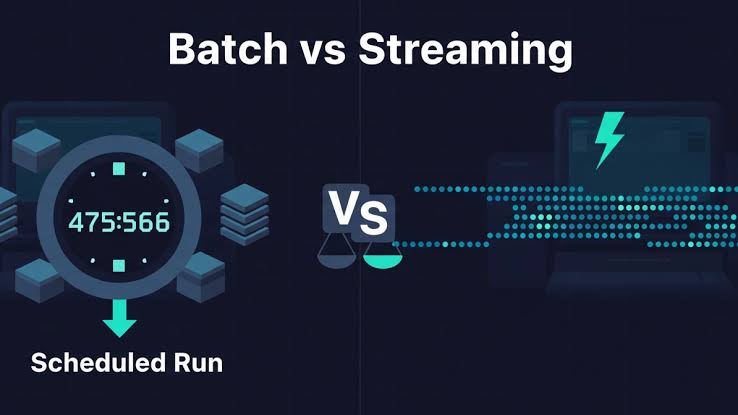
The difference is simple: streaming processes each event the moment it arrives, while batch collects data over time and processes it together. Streaming is built for speed, batch for volume, and the trade-offs follow from that.
| Factor | Event streaming | Batch processing |
|---|---|---|
| Timing | Real time, milliseconds | Minutes, hours, or days |
| Data | Unbounded, continuous flow | Bounded, finite dataset |
| Strength | Immediacy | Efficient at large volumes |
| Consistency | Updates as it goes | Snapshot at a point in time |
| Fleet fit | Live alerts and tracking | Reports and analysis |
Latency, Throughput, and Data
Streaming acts in milliseconds, which is what makes it real time. It treats data as a never-ending flow of events and handles each one as it comes. Batch tolerates far higher latency, from minutes to days, in exchange for processing large volumes efficiently. Streaming also works on unbounded data that never stops, which is harder to manage than the finite, bounded datasets a batch job resets between runs.
When to Use Event Streaming
Use event streaming when a fleet has to act on data the instant it arrives. If waiting even a few minutes would miss the moment, the data belongs in a stream.
Fleet Cases for Streaming
Streaming fits the live, operational side of a fleet. Real-time vehicle tracking needs a constant flow of positions to keep the map current. Geofence and speeding alerts have to fire the moment a threshold is crossed, not later. Speed-limiter and safety events, and harsh-driving events like hard braking, all need to reach the platform immediately so a fleet can respond. These are the cases where a delay defeats the purpose.
When to Use Batch Processing
Use batch processing when a fleet analyzes data after the fact, where timing is not critical. If the value comes from looking back over a period rather than reacting in the moment, batch is the efficient choice.
Fleet Cases for Batch
Batch fits the analytical side of a fleet. Trend analysis over weeks or months, fuel and emissions reports, and compliance and ESG reporting all work on complete historical data. Training predictive-maintenance models runs on large past datasets, and billing or cost reconciliation runs on a fixed period. None of these need to happen the second data arrives, so batch handles them at lower cost.
Micro-Batching: The Middle Ground
Micro-batching sits between real-time streaming and slow batch, processing small batches every few minutes. It gives lower latency than a nightly batch job at less cost than true streaming.
It suits data that should be fresh but does not need to be instant, like a dashboard that updates every few minutes or a near-real-time summary of the fleet. When a fleet wants recent data without the cost of processing every single event on its own, micro-batching is a practical compromise.
Why Most Fleets Use Both

Most fleets run a streaming layer for live operations and a batch layer for analysis, because the two jobs are genuinely different. The live layer keeps the fleet running now; the batch layer turns history into insight. Trying to force one to do both usually ends badly.
Lambda vs Kappa Architecture
There are two ways to combine them: Lambda and Kappa. Lambda architecture keeps separate batch and stream paths and merges their results, giving both real-time speed and reliable historical accuracy, at the cost of maintaining two codebases.
Kappa architecture uses a single stream processor for everything and treats batch work as long-running operations on historical data, which simplifies the code but pushes the stream processor to do jobs it was not designed for. Most fleets lean toward the Lambda split, keeping a fast operational stream and a separate analytical batch layer.
Mapping Fleet Data to the Right Path
The rule for mapping is simple: if the data drives an action now, stream it; if it drives an insight later, batch it. The table below sorts common fleet data by that rule.
| Fleet data | Path |
|---|---|
| Live location and tracking | Streaming |
| Speeding and geofence alerts | Streaming |
| Safety and speed-limiter events | Streaming |
| Fuel and emissions reports | Batch |
| Maintenance model training | Batch |
| Compliance and ESG reporting | Batch |
| Fleet dashboard summaries | Micro-batch |
Where the Pipeline Lives
Both layers work best when one platform runs the live stream and feeds the batch layer from the same captured data. Splitting the data across disconnected systems creates gaps and mismatched numbers.
A connected fleet telematics platform ingests every vehicle’s events once, drives the real-time stream for alerts and tracking, and stores the same data for the batch jobs that produce reports and models. Because the operational and analytical layers draw on one source, the live map and the monthly report never disagree about what happened. That shared foundation is what keeps a two-layer pipeline consistent.
Getting Started
A fleet starts by sorting its data by urgency, streaming what needs action, batching what needs analysis, and running both from one platform. Beginning from what each data stream is actually for keeps the design clear.
- Sort each data type by whether it drives an action now or an insight later.
- Stream the operational data that needs a real-time response.
- Batch the analytical data that feeds reports and models.
- Run both layers from one platform so the numbers stay consistent.
Frequently Asked Questions
What is the difference between streaming and batch processing?
Streaming processes each event the moment it arrives, while batch collects data and processes it together later. Streaming works in milliseconds on a continuous flow; batch tolerates minutes to days on a finite dataset. Streaming suits real-time needs, batch suits analysis.
When should a fleet use event streaming?
A fleet should use streaming when it has to act on data instantly, such as live tracking, speeding and geofence alerts, and safety events. These lose their value if delayed. Anything that must trigger a response the moment it happens belongs in a stream.
What is micro-batching?
Micro-batching processes small batches every few minutes, sitting between streaming and full batch. It gives fresher data than a nightly job at lower cost than true streaming. It fits dashboards and summaries that should be recent but not instant.
What is the difference between Lambda and Kappa architecture?
Lambda architecture runs separate batch and stream paths and merges them, while Kappa uses one stream processor for everything. Lambda gives both accuracy and speed but means two codebases; Kappa is simpler but stretches the stream processor. Most fleets use a Lambda-style split.
Do fleets need both streaming and batch?
Most fleets do need both, because live operations and later analysis are different jobs. Streaming handles real-time alerts and tracking; batch handles reports, trends, and model training. Running both from one platform keeps the live and historical views consistent.