Protecting ISA + Telematics Data in the Cloud
Jan 13, 2026 Resolute Dynamics
In today’s connected world, vehicles aren’t just machines — they’re moving data centers. With systems like Intelligent Speed Assistance (ISA) and real-time telematics, fleets collect and transmit huge amounts of information every second. But with all this data flowing through the cloud, one big question comes up: How do we keep it safe?
Let’s break it down in plain language and look at how to protect this sensitive data in a smart, secure, and future-ready way.
Why Data Security Matters in the Connected Vehicle Era

Fleet vehicles today rely on cloud-connected technologies more than ever. From GPS tracking and fuel usage to driver behavior and speed limits, data is everywhere. ISA systems help ensure drivers stick to legal speed limits, while telematics gives fleet managers eyes on the road — even from miles away.
But this constant data flow brings risks. If sensitive info like driver identity, vehicle location, or behavior patterns falls into the wrong hands, the results could be serious — from privacy breaches to financial loss and non-compliance with laws. That’s why protecting ISA and telematics data in the cloud isn’t just a good idea — it’s essential.
What Kind of Data Are We Talking About?
Before we can protect anything, we need to know exactly what data is being collected, processed, and stored by ISA and telematics systems. Understanding the scope and sensitivity of this data is the first step in building a solid cybersecurity and compliance strategy.
In modern connected fleets, vehicles are no longer just transportation assets — they’re rolling data hubs, constantly sensing, analyzing, and transmitting information.
Let’s break it down by system:
ISA Data (Intelligent Speed Assistance)
ISA systems are designed to help drivers stay within legal speed limits by using a combination of cameras, GPS, and onboard processing. While this might sound simple on the surface, the data ecosystem behind ISA is surprisingly complex.
Here’s what ISA systems typically capture:
-
Real-time vehicle speed: Measured via onboard sensors and compared against local speed limits using GPS and digital maps.
-
Road sign recognition data: Cameras on the vehicle read and interpret speed limit signs, temporary restrictions, and dynamic signage (e.g., in construction zones).
-
Override logs: If the driver manually overrides the ISA system, that action is recorded, including timestamp and location.
-
Geolocation metadata: Every data point is tied to GPS coordinates, making it possible to map behavior against road conditions.
This data may also include environmental context, such as weather or road surface conditions, especially in AI-enhanced systems that consider situational speed adaptation.
Why it’s sensitive:
ISA data can reveal patterns in driver behavior, repeated speeding offenses, and non-compliance with policies. This can be linked to insurance risk profiles, employment decisions, or even legal liability in the case of accidents.
Telematics Data
Telematics is the backbone of fleet intelligence. It involves gathering, transmitting, and analyzing data from vehicles in real time to optimize safety, efficiency, and compliance.
Here are the key types of telematics data:
-
Vehicle location tracking
-
GPS coordinates updated every few seconds or minutes
-
Route history and geofencing events (e.g., unauthorized area entries)
-
-
Driving behavior metrics
-
Harsh braking, aggressive acceleration, sudden lane changes
-
Cornering speed, tailgating detection, distracted driving indicators (when paired with vision AI)
-
-
Engine diagnostics and maintenance data
-
Fault codes from the vehicle’s ECU (Engine Control Unit)
-
OBD-II data streams (fuel levels, oil pressure, temperature, etc.)
-
-
Fuel usage and idling
-
Helps measure fuel efficiency and reduce unnecessary idling
-
Critical for fleet cost management and sustainability targets
-
-
CAN bus data
-
Low-level signals from vehicle sensors, often accessed for advanced diagnostics
-
Includes throttle position, brake pressure, RPM, gear shifts, and more
-
-
Driver identification and session logs
-
Key fob scans or digital driver ID systems that link behavior to specific individuals
-
Useful for compliance and coaching
-
Advanced data applications:
-
Feeding AI/ML models for predictive maintenance
-
Creating driver scorecards for performance management
-
Generating incident reconstruction reports for insurers and authorities
Why it’s sensitive:
Telematics data can paint a full behavioral and operational picture of not only the vehicle but also the driver. It often includes personally identifiable information (PII), like driver names or digital IDs, and can easily be linked to physical locations, routines, and fleet-wide operational patterns.
Combined Data Value and Risk
When ISA and telematics data are combined, the result is a highly granular digital footprint of every trip. This isn’t just useful for safety and compliance — it’s also a prime target for cybercriminals, industrial espionage, and regulatory scrutiny.
For example:
-
A hacker gaining access to live vehicle locations and override history could track high-value cargo routes.
-
An unauthorized data broker could monetize driver behavior profiles or sell risk scores to insurers.
-
A misconfigured API might leak real-time position data, creating a serious physical security risk.
The Role of the Cloud in Vehicle Data Systems
Cloud computing is what makes all this data collection possible at scale. Instead of storing data on the vehicle or a local server, fleets use the cloud to:
-
Process data instantly
-
Share insights across teams
-
Run AI models for predictive analysis
-
Ensure compliance with real-time alerts
Companies like Resolute Dynamics rely on cloud infrastructure to power their AI-driven safety systems. But using the cloud also means relying on third-party platforms, which introduces new security challenges.
Security Risks for ISA and Telematics Data in the Cloud
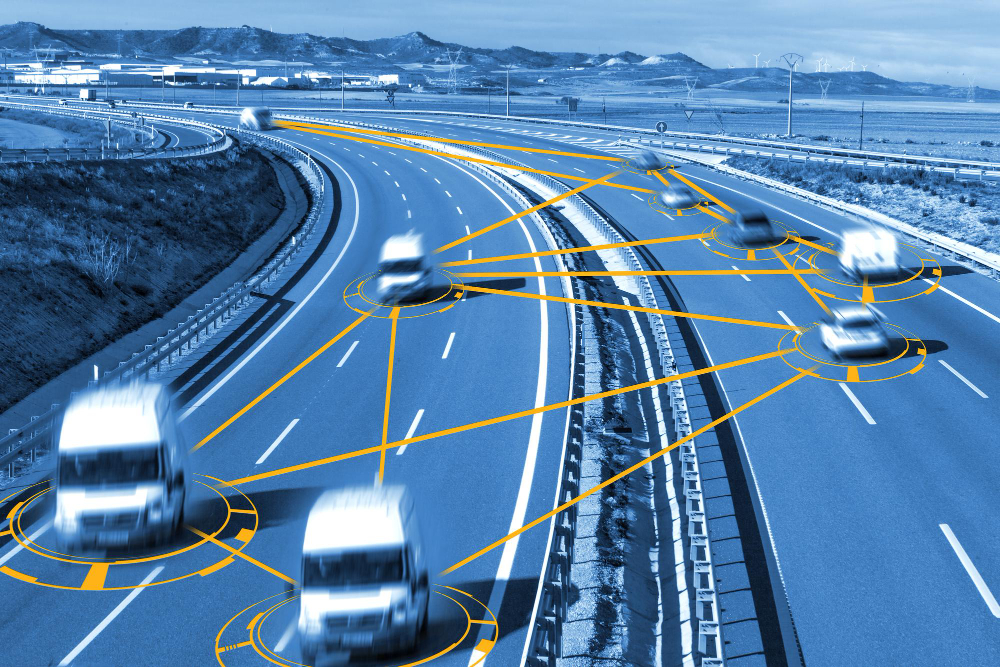
Cloud platforms have made it easier than ever to scale fleet operations and process vehicle data in real time. But with this convenience comes a wide attack surface. The truth is, if the right security controls aren’t in place, ISA and telematics data can become a ticking time bomb — exposing fleets to cyber threats, legal issues, and reputational damage.
Let’s explore the most critical risks that cloud-connected telematics systems face today.
1. Unauthorized Access
This is one of the most common threats — and often the most preventable.
Unauthorized access happens when someone gains entry into your systems without permission, typically due to weak authentication, stolen credentials, or poorly managed user privileges. In the context of ISA and telematics:
-
Hackers could tap into live GPS data and track vehicles in real time.
-
Competitors or malicious actors might access fleet behavior profiles, driver risk ratings, or route patterns.
-
In more serious cases, they might even interfere with over-the-air (OTA) updates, leading to vehicle misbehavior.
Why it’s dangerous:
An attacker doesn’t need to hack your entire cloud platform — sometimes, they just need one weak login, one forgotten access token, or one misused API key.
Mitigation strategies:
-
Enforce multi-factor authentication (MFA) across all admin and user accounts.
-
Use role-based access control (RBAC) to limit data exposure.
-
Monitor for login anomalies, like access from unknown IP addresses or after-hours usage.
2. Man-in-the-Middle (MITM) Attacks
Think of this as eavesdropping on your vehicle’s digital conversation. When telematics data is transmitted between a vehicle and the cloud, it travels through multiple networks. If those communications aren’t properly encrypted, attackers can intercept, view, or even alter the data.
In a MITM attack:
-
Hackers can spoof data, sending fake signals to fleet dashboards.
-
They can steal sensitive info, like driver IDs or vehicle diagnostics.
-
In extreme cases, they can inject malicious commands into the communication stream.
Real-world example:
Researchers have demonstrated how unsecured vehicle-to-cloud protocols can allow attackers to override vehicle functions like speed governors or disable ISA systems remotely.
Mitigation strategies:
-
Use TLS 1.3 encryption for all data in transit.
-
Authenticate endpoints using digital certificates.
-
Regularly rotate encryption keys and monitor certificate validity.
3. Insider Threats
Not all risks come from external hackers. Sometimes, the danger is sitting inside your own company.
Insider threats can come from:
-
Disgruntled employees
-
Negligent contractors
-
Or even third-party service providers with excessive privileges
When someone with access abuses their position, they might:
-
Leak sensitive telematics data
-
Sell driver profiles to data brokers
-
Delete or manipulate critical compliance records
-
Tamper with ISA system logs to hide unsafe driving behavior
Important note:
These threats are hard to detect because they come from trusted identities. Most companies don’t have proper logging or behavior tracking in place to flag unusual actions by insiders.
Mitigation strategies:
-
Implement least privilege policies.
-
Use audit logging and session monitoring.
-
Employ User and Entity Behavior Analytics (UEBA) to detect strange patterns.
4. Misconfigured Cloud Settings
This is one of the leading causes of data leaks in the cloud — and it’s usually accidental.
Fleet operators and SaaS providers often use platforms like AWS, Azure, or Google Cloud. But a single misconfiguration — such as leaving a data bucket public, not restricting API access, or ignoring firewall rules — can expose terabytes of sensitive data.
Examples of what can go wrong:
-
A telematics vendor leaves an Amazon S3 bucket open, exposing all driver route data.
-
A test environment with real production data is accessible without authentication.
-
Fleet data APIs are not throttled or restricted by IP, allowing for brute-force attacks.
Mitigation strategies:
-
Use automated tools to scan for misconfigurations (e.g., AWS Config, Azure Defender).
-
Apply zero trust principles — don’t assume anything is safe by default.
-
Perform routine cloud security audits and simulate breach attempts.
5. Regulatory Non-Compliance
ISA and telematics data often contain personally identifiable information (PII) or location-sensitive records, which means storing and processing this data improperly can lead to regulatory penalties, lawsuits, and public backlash.
Here are a few examples of regulations that impact cloud-based vehicle data:
-
GDPR (EU): Requires clear consent, data minimization, and right to access/erase personal data.
-
UAE Personal Data Protection Law (PDPL): Mandates data localization and clear processing justifications.
-
India’s DPDP Act: Requires user consent, strict data handling rules, and cybersecurity safeguards.
-
CCPA (California): Gives users more control over their personal data and how it’s shared.
Non-compliance risks:
-
Hefty fines (up to 4% of global revenue under GDPR)
-
Suspension of fleet operations in certain markets
-
Lawsuits from drivers or partners for data misuse
Mitigation strategies:
-
Create data governance frameworks tailored to your region.
-
Ensure your cloud providers offer compliance-grade infrastructure (ISO 27001, SOC 2 Type II).
-
Keep audit trails and data processing records for regulatory reviews.
Best Practices for Securing Cloud-Based Vehicle Data

As fleets become more connected, the risk surface expands. ISA and telematics systems constantly transmit sensitive data — and cloud platforms are the backbone. But with this convenience comes responsibility. Protecting cloud-based vehicle data is no longer just an IT concern — it’s a core business function.
Below are the five foundational best practices to harden your telematics and ISA data security infrastructure, reduce risk exposure, and meet global compliance standards.
1. End-to-End Encryption: The First and Last Line of Defense
What it means:
Encryption transforms readable data into a coded format that only authorized systems can decode. It ensures that even if data is intercepted or stolen, it remains useless without the encryption keys.
Where to apply it:
-
In Transit: Data moving between vehicles, cloud servers, and user dashboards must be protected with protocols like TLS 1.3 or VPN tunnels.
-
At Rest: Stored data — whether on cloud storage (e.g., Amazon S3, Azure Blob) or database servers — should use strong encryption like AES-256.
Best practices:
-
Use automatic key rotation to reduce exposure if a key is compromised.
-
Store encryption keys in secure services like AWS KMS or Azure Key Vault.
-
Encrypt logs, backups, and even temporary cache files.
Pro tip: Enable field-level encryption for sensitive ISA data fields (e.g., driver ID, override events), not just at the database level.
2. Role-Based Access Control (RBAC): Limit Who Can Touch What
What it means:
Not every employee or system should have access to all data. Role-Based Access Control ensures users can only access the data and tools they need for their job.
Why it’s critical:
-
Prevents insider misuse
-
Reduces blast radius of breached credentials
-
Makes audits and compliance reporting much easier
How to implement it:
-
Set up granular roles (e.g., “Driver Coach”, “Fleet Admin”, “Developer”, “Data Analyst”).
-
Use principle of least privilege (PoLP) — give the minimum access required, nothing more.
-
Regularly review and revoke unused roles or stale credentials.
-
For enterprise fleets, integrate LDAP or Active Directory for centralized identity management.
Security booster: Pair RBAC with Just-in-Time Access or Time-bound Access Tokens to limit long-term credential exposure.
3. Use Secure APIs: Connect Systems Without Creating Backdoors
What it means:
APIs (Application Programming Interfaces) are how different systems talk to each other — from vehicles to cloud dashboards, from back-office apps to mobile devices. But every open API is a potential attack vector if not secured properly.
Best practices for secure API design:
-
Require OAuth 2.0 tokens or JWT (JSON Web Tokens) for authentication.
-
Enforce rate limiting to prevent brute-force attacks.
-
Log and monitor every API request for anomalies or abuse.
-
Avoid exposing unnecessary endpoints (follow the “minimum exposure principle”).
-
Use HMAC signatures or mutual TLS for trusted service-to-service communication.
Real-world risk: A misconfigured API could let anyone query live GPS data or override vehicle controls — a nightmare for any fleet.
4. Real-Time Monitoring and Threat Detection with AI
Why it matters:
Traditional security tools may only alert you after a breach occurs. But modern threats move fast. AI and ML-powered monitoring systems can detect anomalies as they happen — helping you shut down threats before damage occurs.
What to monitor:
-
Sudden spikes in API usage
-
Login attempts from unusual locations or IP addresses
-
Unusual vehicle data patterns (e.g., multiple ISA overrides in different cities)
-
Unauthorized data exports or bulk downloads
How AI helps:
-
Behavioral baselining: Learns what’s “normal” behavior for users or systems, then flags anomalies.
-
Real-time alerting: Sends instant notifications or auto-quarantines suspicious sessions.
-
Integration with SIEM tools: Like Splunk, Microsoft Sentinel, or IBM QRadar, to centralize security intelligence.
Advanced option: Use UEBA (User and Entity Behavior Analytics) for insider threat detection, especially in large fleet operations.
5. Regular Security Audits and Penetration Testing
Why it’s essential:
You can’t protect what you don’t test. Regular security audits help you identify blind spots in your cloud configuration, application design, or operational processes.
Types of audits to perform:
-
Penetration Testing: Simulated cyberattacks that mimic real-world hacking techniques (external and internal).
-
Cloud Security Posture Management (CSPM): Tools that continuously check for misconfigurations in cloud platforms.
-
Compliance Audits: Review data handling practices to ensure alignment with GDPR, DPDP, PDPL, etc.
-
Access Reviews: Verify that roles and privileges still match employee responsibilities.
Best practices:
-
Conduct quarterly internal audits and annual external audits.
-
Rotate security vendors to get fresh perspectives on vulnerabilities.
-
Document all findings and mitigation steps — important for regulators and insurers.
Don’t forget: Telematics platforms often evolve rapidly. Every time you release a new feature, update permissions, or onboard new users, your security posture changes.
Follow These Cloud Security Standards
Several global frameworks exist to guide cloud security:
-
ISO/IEC 27001: Gold standard for information security management.
-
SOC 2 Type II: Focuses on how companies manage data to protect privacy and confidentiality.
-
NIST Cybersecurity Framework: Widely used in the U.S. and globally for risk management.
Using these frameworks adds a layer of trust — especially when working with insurers or regulators.
Real-Time Compliance with AI Integration
One of the biggest advantages of working with platforms like Resolute Dynamics is their use of artificial intelligence to keep fleets compliant in real-time.
Imagine this:
-
A driver speeds in a zone with a new speed limit.
-
The ISA system flags it instantly.
-
A cloud-based system sends an alert to the fleet manager.
-
AI suggests corrective action or coaching.
All this happens in real time — making compliance automatic and proactive.
Future Trends: What’s Next for Vehicle Data Protection?
Technology evolves fast, and so do the threats. Here’s what’s on the horizon:
Edge Computing
Instead of sending all data to the cloud, more processing will happen on the vehicle itself (the “edge”). This reduces latency and can improve security.
AI-Powered Cybersecurity
AI won’t just help with fleet safety — it’ll also fight cyber threats by spotting patterns that humans miss.
V2X Communication
As vehicles start to talk to everything around them (traffic lights, other cars, buildings), data security becomes even more critical.
Final Thoughts: Secure, Smart, and Ready for the Road
The future of mobility is connected, intelligent, and fast-moving. But with great data comes great responsibility.
Protecting ISA and telematics data in the cloud isn’t just about technology — it’s about trust. Trust between drivers and fleet managers. Trust between businesses and regulators. And most of all, trust that every journey is safe, compliant, and secure.
If you’re using connected systems in your fleet, now is the time to take cloud data security seriously — before someone else takes it from you.