V2X Communication for Commercial Fleets: How Vehicle-to-Everything Transforms Fleet Safety
Apr 26, 2026 Resolute Dynamics
TL;DR: V2X communication lets your trucks, vans, and buses “talk” to nearby vehicles, traffic lights, pedestrians’ devices, and the cloud in real time. In fleet terms, that means earlier hazard calls than your cameras can give, fewer hard hits and pileups, smoother speed profiles, and a much easier path to meeting the wave of connected-safety regulations that’s coming.
Key Takeaways
- V2X (Vehicle-to-Everything) covers V2V, V2I, V2P, and V2N links that sit on top of cameras, radar, and ADAS and give you “non-line-of-sight” awareness plus intent sharing between road users.
- C-V2X (3GPP cellular) is rapidly overtaking DSRC (IEEE 802.11p) as the workhorse technology for fleet deployment thanks to 5G NR-V2X, better range and robustness, and stronger regulatory momentum.
- Real-world fleet use cases include intersection collision warnings, emergency braking chain prevention, work-zone speed reduction, and cooperative speed harmonization in convoys.
- Regulators in the US, EU, UAE, and India are standing up C-ITS / V2X frameworks; dates and details differ, but the expectation that commercial fleets run connected safety is tightening everywhere.
- Basic Safety Messages (BSM), Cooperative Awareness Messages (CAM), and Cooperative Perception Messages (CPM) are the main message types that carry vehicle state, hazards, and shared sensor data.
- For speed-governed fleets, V2X can dynamically adjust governed speeds based on live limits, traffic, and incident data, as already implemented by Resolute Dynamics’ Control platform.
- Cybersecurity, retrofit strategy, and tight integration with telematics/ECUs matter more for ROI than the radio brand stamped on the box.
- Forward-looking fleets can start with pilot corridors and retrofits right now instead of waiting for a regulator to hand them a deadline.
What Is V2X Communication for Commercial Fleets?
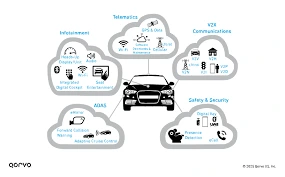
V2X (Vehicle-to-Everything) communication is a wireless system that lets vehicles exchange standardized messages with other vehicles (V2V), road infrastructure (V2I), pedestrians or cyclists (V2P), and backend networks/cloud (V2N).
For commercial fleets, V2X takes you beyond what the truck can “see” with its own sensors and delivers real-time warnings, speed advisories, and cooperative maneuvers that improve safety, fuel efficiency, and regulatory compliance.
What Is V2X and Why Should Fleet Operators Care?
V2X enables vehicles to communicate with other vehicles (V2V), infrastructure (V2I), pedestrians (V2P), and networks (V2N). For a fleet, that turns into collision avoidance, signal priority opportunities, speed harmonization, and live hazard awareness instead of guessing off a dash cam and a map.
Look at where most commercial vehicles run now. Urban last‑mile routes, busy logistics corridors, buses threading through school zones and downtown streets. Cameras and radar only handle what is in their cone of vision.
Fog, a box truck blocking the view, or a blind curve can leave the driver flying half blind. V2X lets your assets “see around corners” by sharing intent and hazard data over dedicated short-range links and cellular networks, so the truck knows there is a problem ahead before the driver’s eyes do.
For fleet operators, that usually translates into:
- Fewer crashes and claims because drivers and control systems get earlier warnings and can coordinate their moves with the traffic around them.
- Reduced downtime by staying out of multi-vehicle pileups, intersection T‑bones, and messy work‑zone incidents that tie up trucks and drivers.
- Safer, smoother driving thanks to cooperative speed control, green‑wave awareness, and fewer surprise stops.
- Readiness for emerging mandates from the US DOT, EU C-ITS programs, UAE RTA, and India’s BIS V2X standards that are pushing toward connected safety as a baseline.
- Better data for policy and insurance through high‑resolution logs of events, BSMs, and how vehicles interacted with infrastructure and other road users.
So V2X communication for commercial fleets is not just another gadget bolted beside the telematics box. It is becoming part of the same safety and compliance stack as your speed governors, ELDs, and ADAS, and it will separate serious fleets from everyone else over the next decade.
V2X Communication Modes for Fleet Safety
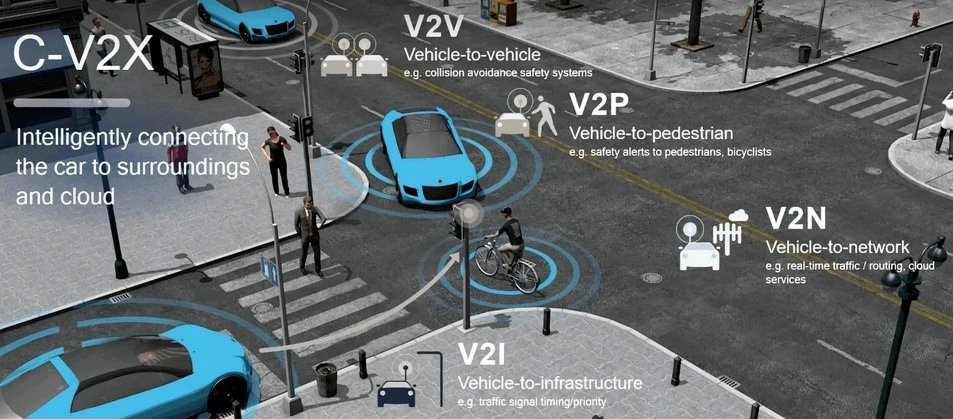
V2X for fleets rests on four main communication modes: V2V, V2I, V2P, and V2N. Each one fills different safety and efficiency gaps, but you only get the full benefit when they run together as a cooperative safety layer over your existing ADAS, telematics, and driver policies.
V2V — Vehicle-to-Vehicle
V2V (vehicle-to-vehicle) communication lets trucks, buses, vans, and passenger cars broadcast and receive their dynamic state in real time. In the US this usually comes through Basic Safety Messages (BSM). In Europe, it is Cooperative Awareness Messages (CAM). Those packets are small, but they carry a lot of useful data:
- GPS position and heading so everyone knows where each vehicle is pointed
- Speed and acceleration so you can tell if it is pulling away, slowing, or panic‑braking
- Brake status and turn signals so intent is shared, not guessed
- Vehicle size and type, which matters when you are following a loaded tractor‑trailer instead of a compact sedan
For fleets, solid V2V support unlocks a handful of serious tools:
- Forward collision warnings: If a truck ahead hammers the brakes, following trucks get instant warnings, even if the brake lights are hidden behind a curve or traffic.
- Blind-spot and lane-change assistance: Vehicles alongside or slightly back can broadcast their position and lane so your driver knows that gap is not actually clear.
- Emergency braking chain reaction prevention: Coordinated deceleration up and down a convoy smooths out the “accordion effect” and drops the odds of rear-end pileups.
- Convoy and platoon management: Close‑following trucks in a fleet convoy can share speed targets and headway information to keep gaps steady and save fuel.
On the technical side, V2V usually runs on either IEEE 802.11p DSRC / ETSI ITS-G5 or 3GPP C-V2X PC5 sidelink. PC5 is a direct device‑to‑device link. Messages never detour through a cell tower, which keeps one‑way latency down in the tens of milliseconds, short enough for meaningful safety reactions. On the vehicle side, edge AI processes V2X messages locally so reactions happen before the data ever touches the cloud.
V2I — Vehicle-to-Infrastructure
V2I (vehicle-to-infrastructure) ties your vehicles into the fixed gear along the road. That includes roadside units (RSUs), traffic lights, variable message signs, work‑zone trailers, and smart beacons. Those devices can send and receive standardized messages such as signal phase and timing (SPaT), intersection map data, and hazard alerts.
In practice, the most valuable V2I fleet safety applications are things like:
- Traffic signal timing awareness: Vehicles get time‑to‑green and time‑to‑red information so drivers can roll off the throttle earlier, cut harsh braking, and cut down on red‑light violations.
- Intersection collision warning: RSUs at busy intersections combine SPaT and V2V data from multiple approaches and warn your driver if cross‑traffic is about to blow a red light or stop sign.
- Work-zone alerts and speed reduction: Trucks get warned about lane drops, detours, and new work‑zone speed limits long before the first cone or sign is in view.
- Emergency vehicle preemption: Buses and other priority vehicles can benefit from coordinated green waves, while your trucks get a heads‑up that an ambulance is coming through.
V2I really shines where your routes are predictable. Urban bus lines, municipal fleets, and heavy use freight corridors get an outsized benefit when a city’s C-ITS program prioritizes their regular trouble spots, like bad intersections and chronic bottlenecks.
V2P — Vehicle-to-Pedestrian
V2P (vehicle-to-pedestrian) expands situational awareness to vulnerable road users (VRUs) such as pedestrians, cyclists, and scooter riders. Instead of your truck relying only on line‑of‑sight camera detection, V2P uses smartphones or dedicated VRU beacons to broadcast position and movement patterns.
For commercial fleets that live in dense city streets, V2P support can:
- Warn drivers when a pedestrian is stepping into a crosswalk that is hidden behind buses, parked vehicles, or street furniture.
- Generate special alerts around school zones, transit stops, or depots with constant foot traffic and people walking between vehicles.
- Help bus drivers during boarding and alighting by highlighting people drifting into danger zones near mirrors and blind areas.
Under the hood, V2P has to be handled carefully so it does not turn into a tracking tool. Standards lean on short‑lived identifiers and context‑driven alerts, so the system knows “someone is in the crosswalk now” rather than “this specific person is being followed.”
In combination with V2I at crossings, V2P adds another layer on top of cameras and mirrors that already work hard but still miss things in cluttered environments.
V2N — Vehicle-to-Network
V2N (vehicle-to-network) rides on the cellular Uu interface to link vehicles with cloud services, traffic management centers, and fleet backends. It does not replace V2V or V2I. It supports them by handling bigger data flows and longer time‑scale decisions.
From a fleet perspective, V2N enables things like:
- Cloud-based traffic optimization: Real‑time traffic, weather, and incident feeds inform routing, departure times, and recommended speeds across whole corridors.
- Over-the-air (OTA) updates: V2X modules, ECUs, and your policy engine get new safety apps, intersection maps, and updated governance rules without a trip to the shop.
- Centralized hazard aggregation: Events from hundreds of vehicles, like sudden braking or low‑friction patches, can be combined to spot patterns and warn the rest of the fleet.
That gives fleets a loop to work with. V2V/V2I/V2P deliver detailed local awareness minute by minute, while V2N feeds analytics, planning, and compliance reporting in the cloud.
In more mature setups, fleet data from V2X feeds cloud platforms that your operations team uses to tune routes, update policies, and prove to regulators and insurers how your safety systems behaved.
C-V2X vs DSRC: Which Technology Wins for Fleet Deployment?
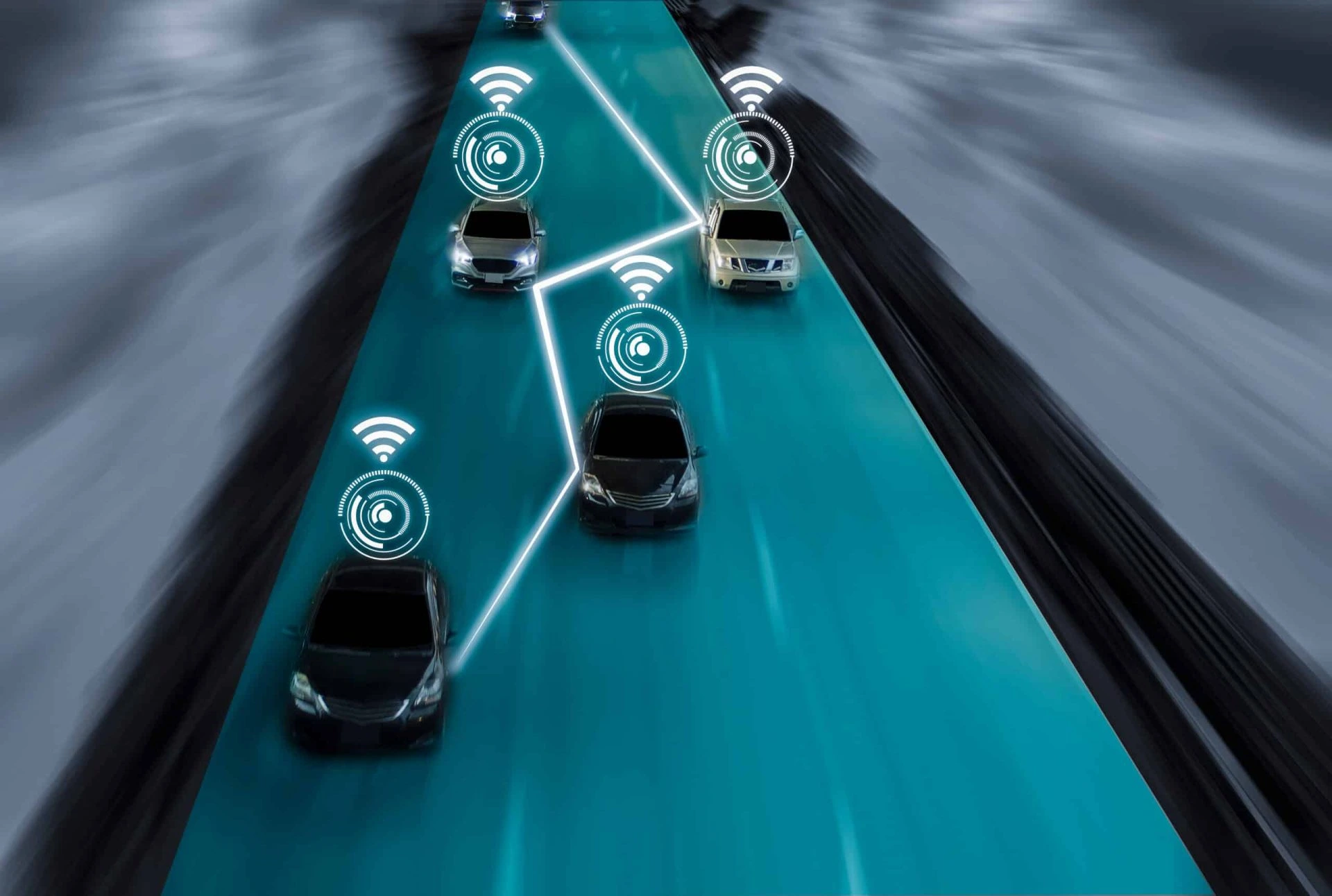
C-V2X (3GPP cellular) and DSRC (IEEE 802.11p) both sit in the 5.9 GHz band and both can carry low‑latency safety messages. On paper they might look interchangeable.
In real fleet life, their ecosystems, upgrade paths, and regulatory backing are very different, and those differences matter because you keep heavy vehicles in service for a long time.
In brief: C-V2X has become the front‑runner for new deployments. The main reasons are the 5G NR-V2X roadmap, better range and robustness in messy RF conditions, and stronger support from chipset vendors, OEMs, and mobile operators.
C-V2X: Cellular Vehicle-to-Everything
C-V2X, standardized by 3GPP, has two link types that work together:
- PC5 sidelink: Direct vehicle‑to‑vehicle and vehicle‑to‑infrastructure communication without touching the cellular core. This is the workhorse for safety‑critical messages.
- Uu interface: Traditional cellular connectivity between vehicles and the LTE/5G network for cloud and management services.
From the fleet side of the fence, the key C-V2X attributes look roughly like this:
- Standard body: 3GPP C-V2X standard (Release 14/15) with Release 16 NR-V2X as the 5G evolution path.
- Frequency band: 5.9 GHz ITS band used across major regions.
- Latency: Around 20–30 ms one‑way for safety messages on PC5 in typical field conditions.
- Range: Up to roughly 1,000 meters or more in clear highway line‑of‑sight, less in cluttered urban canyons but still generally better reach than DSRC.
- 5G NR upgrade path: Yes, with stronger reliability, higher density support, and improved sidelink features in NR-V2X.
- Fleet deployment cost per vehicle: Often quoted around $200–$600 per vehicle for hardware, then labor and integration on top. As volumes grow, unit cost tends to drift down.
Chipset vendors behind products like the Qualcomm 9150 C-V2X chipset offer multi‑mode units that handle PC5 sidelink plus LTE/5G connectivity. That lets fleets and infrastructure operators deploy once, then grow into NR-V2X without ripping everything out again in a few years.
DSRC / IEEE 802.11p and ETSI ITS-G5
DSRC (Dedicated Short-Range Communications), built on IEEE 802.11p, was the first widely tested V2X radio technology. A lot of early test corridors ran on it. In Europe, DSRC is wrapped into the ETSI ITS-G5 standard. In North America, it powered the first V2V and V2I pilots before the tilt toward C‑V2X.
The headline DSRC / ITS‑G5 attributes:
- Standard body: IEEE for 802.11p and ETSI for ITS‑G5 profiles and higher layer behavior.
- Frequency band: Same 5.9 GHz ITS spectrum.
- Latency: Around 10–20 ms for safety messages in clean channel conditions.
- Range: Typically 300–500 meters in urban conditions, sometimes more in open, flat areas.
- 5G upgrade path: No direct migration path. DSRC is Wi‑Fi‑like and sits outside the cellular roadmap.
- Regulatory status: Support is fading in several regions where spectrum has been trimmed or reallocated in favor of C‑V2X.
DSRC / ETSI ITS-G5 has proven its low‑latency chops in the field and some C-ITS corridors still use it. That said, many regulators and OEMs now steer new rollouts toward C-V2X, which shifts the long‑term support picture.
C-V2X vs DSRC: Fleet-Relevant Comparison
The table below lines up the two approaches side by side. Use it as a sanity check when vendors pitch you hardware.
| Aspect | C-V2X (3GPP) | DSRC / IEEE 802.11p / ETSI ITS-G5 |
|---|---|---|
| Standard body | 3GPP (Release 14–16, NR-V2X) | IEEE (802.11p), ETSI (ITS-G5) |
| Spectrum | 5.9 GHz ITS band | 5.9 GHz ITS band |
| Latency | ~20–30 ms (PC5) | ~10–20 ms |
| Range | Up to ~1 km LOS | ~300–500 m typical |
| 5G evolution | Yes (NR-V2X) | No direct path |
| Network leverage | Integrates with LTE/5G, Uu | Standalone roadside/vehicle radios |
| Regulatory momentum | Growing (US, China, Europe pilots) | Declining support in some regions |
| Fleet deployment outlook | Preferred for new deployments | Legacy / niche in some corridors |
Practical decision for fleets:
- If your primary markets are leaning into C-V2X, pick C‑V2X‑capable OBUs and look for software‑configurable region profiles so one hardware family can cover multiple markets.
- If you still operate heavily in a corridor with existing DSRC / ITS-G5 RSUs, consider dual‑mode units or gateway bridges while the region transitions.
- Put at least as much effort into integration (ECUs, telematics, speed governors, HMI) as you do into picking the radio. That is where the operational value either happens or dies.
Fleet Safety Use Cases Enabled by V2X
V2X is not just something engineers put on slides. For a fleet operator, it is a set of very specific tools you can turn on and measure. The main use cases below are already running in pilots and early deployments, built on standards such as BSM, CAM, and Cooperative Perception Messages (CPM).
Intersection Collision Warning
Ask any safety manager: intersections are where bad days start, especially for heavy vehicles. Sightlines are broken, people rush yellow lights, and drivers misjudge gaps. When you are hauling weight, side‑impact collisions get brutal fast.
V2I-based intersection collision warning uses RSUs at key intersections to gather V2V broadcasts and signal controller data and then look for conflicts. Typical characteristics look like this:
- Detection range: Roughly 300–500 meters out from the intersection, depending on building layout and antenna placement.
- Warning latency: Around 50–100 ms from detecting a conflict to putting an alert in the cab.
- Intersection types supported: Traditional signalized intersections with SPaT/Map connections today, with unsignalized and stop‑controlled junctions coming into scope as more roadside sensors go in.
- Fleet safety improvement: Field results vary, but programs have reported up to 30–40% crash reduction for certain intersection crash modes when V2I warnings are in play.
- Infrastructure requirement: An RSU tied into the intersection controller, plus a backhaul connection if analytics or centralized coordination is needed.
For fleets, the real win is getting earlier, more specific warnings. Instead of a generic “caution ahead,” the driver can hear “vehicle running red from right” while there is still time to brake and keep the tractor upright.
Emergency Braking and Chain Reaction Prevention
Highways have a different kind of risk. One truck panic‑brakes and everyone behind it plays catch‑up. With 80,000 pounds at speed, a few seconds of delay is the difference between a near‑miss and a six‑truck pileup.
With V2V BSM/CAM broadcasts active:
- When the lead truck in a line applies hard brakes, following trucks receive an emergency electronic brake light alert that cuts through normal traffic noise.
- Those alerts can feed graduated interventions. First a sharp audio or visual warning, then torque cut or mild decel, and eventually coordinated braking where the hardware supports it.
- Because PC5 sidelink does not rely on live cellular coverage, this still works in rural dead zones and tunnels.
If you tie those V2V events into your speed governance from V2X signals logic, the governed speed can start dropping before the driver even sees the brake lights up ahead. That kind of head start is how you avoid the secondary collisions that keep claims departments busy.
Cooperative Speed Harmonization in Convoys
Cooperative speed harmonization is a fancy name for something simple. Let the trucks adjust speed in a coordinated way instead of every driver reacting late to the bumper in front of them. For long‑haul fleets and high‑volume corridors, that alone can clean up a lot of chaos.
In practice, a V2X‑enabled convoy behaves like this:
- Speed adjustment latency: Target is about 100–300 ms from getting a new speed advisory to applying it to the governed speed setting.
- Convoy coordination: In real fleets, coordinated groups of 5–20 vehicles are typical. Bigger than that and management becomes political as well as technical.
- Fuel saving estimate: By cutting stop‑and‑go and trimming harsh accel/decel, fleets often see 2–8% fuel savings, depending on route profile and loading.
- Safety improvement: Smoother traffic flow translates into fewer sudden slowdowns. Trials have shown 10–30% cuts in rear‑end incidents in dense traffic when harmonization is applied consistently.
- Resolute Control integration: Resolute Dynamics’ Control module can take harmonization advisories from V2X and translate them into governed speed adjustments while still respecting your policies.
Unlike tight platooning, cooperative harmonization does not force nose‑to‑tail gaps or expect full automation. You still have human drivers in charge, with the system nudging speed and helping remove the worst of the shockwaves.
Work-Zone Speed Reduction and Lane Closure Alerts
Ask drivers what they dislike and work zones end up near the top. Narrowed lanes, last‑second signage, nighttime glare, workers inches from the traffic lane. For heavy vehicles, that is a bad cocktail.
V2I-enabled work-zone tools help clean that up by letting:
- RSUs or portable beacons at the entry of the zone broadcast upcoming lane closures, taper locations, and temporary speed limits.
- Fleet vehicles receive those warnings far enough in advance to change lanes and scrub speed without panic braking.
- Your governed speed caps automatically step down while the truck is inside the work‑zone geofence defined by the V2I messages.
When you tie those messages directly into governance rules, you are not betting on someone catching a small “45 mph” plaque behind a line of cars. The vehicle itself respects the limit, and the system can log overrides or attempts to push past the limit for later coaching.
Emergency Vehicle Preemption and Priority
Some fleets, especially transit and emergency services, live and die by how quickly they can move through a city grid. V2I preemption and priority services are built exactly for that use case.
In a mature setup:
- Emergency vehicles and certain priority buses broadcast approach messages via V2V/V2I as they roll toward an intersection.
- Traffic signals on the path receive a preemption or priority request and reshape the phases to create a “green wave” where possible.
- Other connected fleet vehicles along the route get alerts so their drivers have more time to yield safely.
So you get faster response times for the priority vehicles and you cut down on surprise lane changes and harsh braking that often trigger secondary crashes involving freight and passenger fleets.
Cooperative Perception for Blind Corner Hazards
Cooperative Perception Messages (CPM) take V2X a step beyond each vehicle reporting its own state. With CPM, roadside sensors or other vehicles can share detections of objects that your driver cannot see yet. Think of it as loaning your truck someone else’s sensors.
For fleets, CPM‑based cooperative perception opens up some strong options:
- Blind corner hazard alerts: Warnings about slow or stopped vehicles, pedestrians, or bikes hidden around a curve or behind a truck, delivered while your driver still has clean options.
- Improved safety in depots and yards: Fixed sensors at gates, loading docks, or within a yard can share object lists to vehicles maneuvering in tight spaces with poor mirrors and lots of foot traffic.
- Augmented ADAS: Your truck’s ADAS gets early hints from CPM and then confirms them with onboard sensors, which improves both detection and confidence.
As fleets step into more advanced driver assistance and partial automation, CPM becomes more and more relevant. It fills the blind spots that high‑end sensors alone still struggle with in complex real‑world layouts.
V2X Regulatory Landscape for Fleet Markets (US, EU, UAE, India)
Regulation is the quiet hand that decides which V2X tech lives and how quickly fleets are expected to use it. No one has thrown a global switch yet, but the direction is clear: connected, cooperative safety is moving from “nice experiment” to “standard practice,” especially for commercial operators.
Key Elements of the V2X Regulatory Timeline
The V2X regulatory timeline is not uniform, but some common patterns are showing up:
- US DOT mandate: Earlier proposals for a blanket V2V rule for light vehicles stalled. Current efforts focus more on C-V2X rulemaking and pilots, with active work but no single binding nationwide date published yet.
- EU C-ITS deployment: The EU has been backing C-ITS deployment corridors since the mid‑2010s. Member states are rolling out cooperative services in layers along TEN‑T routes instead of betting everything on a single mandate year.
- UAE RTA program: The UAE RTA connected vehicle projects in Dubai, Abu Dhabi, and other emirates are running staged V2X trials that tie into their wider smart mobility and autonomous ambitions.
- India BIS standard: India’s Bureau of Indian Standards (BIS) is drafting V2X specifications that line up with global 3GPP and DSRC work, with large mandates still being mapped out.
- Fleet compliance deadline: More often connected to individual corridor projects, tenders, or city access rules than any global drop‑dead date.
United States: US DOT and Spectrum Reallocation
In the US, the US DOT has pushed connected vehicle safety for years. The big shift in recent times has been away from DSRC and toward C‑V2X. The 5.9 GHz band has also been reshaped, with a preference for C‑V2X in the safety portion of the spectrum.
For fleets running in the US, that points to a few practical steps:
- Expect more C-V2X pilots and state‑level C-ITS work along major freight corridors and metro regions rather than scattered one‑off tests.
- Plan for US DOT V2X mandate style expectations showing up indirectly through grant programs, carrier safety scores, or city access policies, even if a formal binding federal mandate drags.
- Make sure any new OBUs or telematics boxes you spec are C-V2X-ready or have a clean upgrade path so you do not get stuck mid‑cycle.
European Union: C-ITS and ETSI ITS-G5
In the EU, V2X sits under the Cooperative Intelligent Transport Systems (C-ITS) banner. Many on‑road deployments still rely on ETSI ITS-G5 (DSRC‑based), while also preparing for a mixed world where C‑V2X and eventually NR-V2X sit alongside it.
For fleets that crisscross Europe, that means:
- Running on C-ITS corridors may earn you better access conditions, smoother tolling, or signal priority as those programs mature.
- Hardware with ETSI ITS‑G5 support today, or clean gateway options from ITS‑G5 to C‑V2X, helps you carry early investments forward.
- Some European OEMs are already offering DSRC and C‑V2X combos, so map each vehicle’s capability against the specific countries and corridors you operate in.
UAE: RTA Connected Vehicle and Smart City Programs
The UAE RTA connected vehicle projects are part of a bigger push around smart cities and automated mobility. Dubai, Abu Dhabi, and other emirates are all running their own flavors of V2X pilots and connected corridor initiatives.
For fleets active in the UAE, expect:
- City-led requirements for connectivity on designated smart routes, urban logistics schemes, or bus operations.
- Early adopters to get first crack at priority corridors, autonomous shuttle pilots, and high‑visibility smart logistics contracts.
- V2X readiness to increasingly affect how permits, concessions, and licenses for buses and heavy fleets are awarded or renewed.
India: BIS V2X Standardization and Pilot Corridors
India’s BIS V2X standards work is moving in parallel with national smart city projects and dedicated freight corridors. The traffic density and mix of vehicle types there make V2X a strong tool if deployed carefully.
For fleets in or entering India:
- Look for pilot deployments on big freight routes and in megacities. Participation lets you influence what “good” looks like and how tender language is written.
- Keep your systems flexible so they can support both C-V2X and any local BIS‑defined adaptations or application profiles.
- Use early V2X capability as a selling point in safety and service quality bids, especially for contracts with government or major shippers.
Across all these regions you see the same trend. No one is saying “all fleets must flip on V2X next January,” but connected safety is fast becoming part of what regulators expect from serious operators, particularly in urban cores and on strategic freight corridors.
How Resolute Dynamics Integrates V2X into Fleet Speed Governance
V2X communication really earns its keep once it is tied into control actions on the vehicle. Fleets that already run speed governors and policy‑based interventions are in a good spot. Resolute Dynamics’ Control platform is built to ingest V2X data and convert it into safe, step‑by‑step speed governance choices instead of just another blinking light.
At a high level, Resolute’s V2X integration listens for V2I speed limits, V2V chain braking signals, and cooperative perception feeds, then passes that information into the Control module. That gives you cooperative speed governance, where the governed speed cap is tuned in real time using live V2X infrastructure data instead of relying only on static map speed limits.
Receiving V2I Speed Limit and Signal Data
Through a C‑V2X or DSRC OBU sitting on the vehicle, the Control platform can receive:
- Static and dynamic speed limits pushed out by V2I RSUs along the route.
- Temporary work-zone speeds, lane changes, and detour instructions during construction or incident management.
- Signal phase and timing (SPaT) data, including how long until the light switches from green to red or vice versa.
Resolute Dynamics’ Control engine aligns those V2I messages with the truck’s location, direction, and current state, then:
- Adjusts the governed speed cap to match the most restrictive applicable limit, including temporary ones.
- Promotes smoother deceleration into red lights and congestion by reducing the cap in advance rather than waiting for the driver to spot brake lights.
- Logs policy events such as attempts to exceed dynamic limits or repeated late decels, feeding both safety reports and driver coaching.
Using V2V Chain Braking and Hazard Messages
When upstream vehicles broadcast emergency braking or hazard flags via V2V BSM/CAM messages, the Control platform can react long before onboard sensors would normally trip.
- It can fire early warnings in the cab so the driver is primed before seeing any visual cue outside.
- It can apply graduated interventions like torque limiting, soft deceleration, or pre‑charging brake assist systems to cut reaction time.
- It can sync responses across multiple trucks in a convoy so that everyone bleeds speed in a compatible pattern instead of snapping off the throttle at slightly different times.
This is where V2X triggers speed interventions based on your defined policies. You stop relying solely on whether a driver happens to notice a small warning icon and you let the governance logic handle the first stages.
Cooperative Speed Governance Logic
Resolute’s cooperative speed governance model pulls together three main input groups:
- Map-based limits that define the normal baseline for where and how fast your vehicles should run.
- V2X dynamic inputs such as work‑zone instructions, incident warnings, and harmonization advisories.
- Internal safety and compliance policies, like weather‑based derating, hazmat restrictions, or company‑specific safe‑speed rules.
The Control module blends those into a single safe, policy-compliant governed speed at each point on the route. If a V2X message points to rising risk, for example a high‑risk intersection ahead or hard braking a half‑mile up the road, Control can temporarily pull the governed speed down, then ease it back as those conditions clear.
This style of architecture supports ISO safety for V2X systems and SOTIF‑aligned thinking, because V2X is treated as another valuable input source, not a single point of truth. That layered approach is what most safety assessors look for.
Integration, Not Isolation
Resolute’s V2X integration is built to be radio‑agnostic. That matters for fleets that manage mixed geographies and infrastructure types. In practice you can deploy:
- C‑V2X‑only OBUs in markets that are all‑in on 3GPP standards.
- Dual‑mode OBUs or gateway setups in regions where ETSI ITS-G5 equipment is already roadside and will stay live for a while.
- V2N‑style applications over the existing cellular telematics links you already pay for.
The Control platform abstracts away whether the input came from DSRC, C‑V2X, or a cloud feed. Its focus is on consistently turning BSM, CAM, CPM, SPaT, and speed advisory messages into clear, explainable governance actions so your safety team can audit and refine them.
Common Mistakes Fleets Make with V2X (and How to Avoid Them)
Every time a new technology wave hits fleets, the same kinds of mistakes pop up. V2X is no different. Avoiding these early missteps makes the difference between a show‑and‑tell pilot and something that measurably cuts incidents.
Mistake 1: Treating V2X as Just Another Telematics Add-On
One pattern I see a lot is fleets bolting a V2X OBU under the dash, turning on a dashboard tile, then walking away. The truck “has V2X” on paper, but it never affects how anyone drives or how the vehicle behaves.
Fix: Design V2X as part of your broader control and safety stack from the beginning. Decide where messages will drive interventions, where they feed coaching, and where they feed analytics. Dashboards alone rarely change behavior.
Mistake 2: Over-Focusing on Radio Choice, Under-Focusing on Integration
Teams often burn months arguing C‑V2X vs DSRC specs while leaving the hard integration work to the last minute. The radio argument is the easy part.
Fix: Pick standards‑aligned hardware with a solid roadmap, like C‑V2X units that clearly support NR‑V2X in future, then spend your real effort on API, ECU, HMI, and safety architecture integration. V2X only pays off when it has a clear path into vehicle behavior and driver decisions.
Mistake 3: Ignoring Cybersecurity and Credential Management
V2X messages absolutely must be trusted. Spoofed hazard alerts or fake speed limits are not just annoying, they are unsafe. Yet some pilots skip proper security or treat it as a later concern.
Fix: Build around proper public key infrastructure (PKI), signed messages, and certificate management from day one. Align with regional SCMS or C‑ITS security frameworks and get your internal security team involved early so V2X is covered by the same policies as the rest of your connected gear.
Mistake 4: Assuming Coverage Everywhere from Day One
Fleets sometimes plan as if every intersection, yard, and work zone will be lit up with V2I from day one. That is not how deployments roll out. They start with key corridors and high‑risk spots.
Fix: Focus on pilot corridors where V2I exists or is planned, and use a hybrid strategy elsewhere where V2X augments maps, ADAS, and local rules. Design your policies so they fail gracefully. If V2X is missing or intermittent, the truck falls back to a known safe baseline, not something unpredictable.
Mistake 5: Neglecting Training and Human Factors
Another common failure mode is flooding drivers with beeps and symbols they do not understand. That leads to alarm fatigue, and before long the “V2X warning” becomes just more background noise.
Fix: Use graduated, prioritized alerts so only the most urgent situations cut through. Keep the in‑cab messaging simple and consistent. Fold V2X concepts into driver training and coaching so they know what each cue means and how they are expected to respond.
Mistake 6: Overstepping Safety Standards Scope Internally
V2X touches functional safety and SOTIF. Some fleets try to own every detail of ISO 26262 and SOTIF compliance themselves, on top of running operations. That usually stretches teams thin.
Fix: Bring in outside expertise where needed and separate concerns. Use dedicated content and tooling for V2X functional safety requirements and for managing V2X as SOTIF input source. Let your internal operations teams focus on using the system and maintaining hardware while safety specialists sign off the architecture.
FAQ: V2X Communication for Commercial Fleets
Below are straight answers to the questions fleet operators tend to raise first about V2X deployment, cost, and timing.
Can existing fleet vehicles be retrofitted with V2X?
Yes. Most commercial vehicles can be retrofitted with V2X OBUs tied into power, CAN, and your telematics backbone. The heavy lift depends on how many different makes and model years you run, and whether you only want in‑cab alerts or full integration with speed governance and braking support. Start with a pilot across a few representative vehicle types before scaling.
How much does V2X hardware cost per vehicle?
Costs are still moving, but many fleets see hardware for a C‑V2X‑capable unit land in the $200–$600 range per vehicle. Then add installation, integration work, and backend services. Dual‑mode or extra‑rugged units cost more, while large volume orders and standardized spec’ing help push the per‑unit price down.
Is V2X secure enough for safety-critical fleet operations?
When deployed with PKI-based security, signed messages, and tamper‑resistant hardware, V2X is built for safety‑critical use. You still need solid cyber hygiene on your side. That means secure software update processes, key rotation, intrusion monitoring on telematics backends, and alignment with the regional SCMS or similar credential systems your market adopts.
When will V2X become mandatory for fleets?
There is no global date circled on the calendar. The US DOT V2X mandate concepts, EU C-ITS deployment work, UAE RTA connected vehicle programs, and India’s BIS V2X standardization efforts are all moving, but on different clocks. Expect early requirements to show up in specific city schemes, freight corridors, procurement specs, and safety programs rather than as a sudden universal mandate.
Should fleets invest in V2X now or wait?
Fleets with higher exposure, such as urban delivery, buses, hazmat, or dense‑corridor freight, usually benefit from phased deployment now. Start with limited pilots, learn how V2X interacts with your drivers and routes, prove the safety and fuel numbers, then expand. Waiting until a regulator forces your hand often means rushed retrofits and limited choice.
What is the difference between C-V2X and 5G NR-V2X for fleets?
C-V2X on LTE (Release 14/15) already handles core safety use cases with PC5 sidelink. 3GPP Release 16 NR-V2X upgrades the sidelink with better reliability, improved interference handling, and support for more complex cooperative maneuvers. For fleets, the smart move is choosing hardware with a clear NR-V2X roadmap so your current installs can evolve instead of being a dead end.
How does V2X relate to ADAS and autonomous functions in trucks?
ADAS features like AEB, lane keeping, or adaptive cruise run mostly on cameras, radar, and lidar. V2X adds a cooperative layer where vehicles and infrastructure share intent and hazard information that sensors alone cannot see in time. As autonomy grows, trucks will blend ADAS, HD maps, and V2X into a single decision system. For human‑driven fleets today, V2X still pays off by giving the driver and ADAS earlier and richer information.
Does V2X depend on cellular coverage?
Not entirely. The PC5 sidelink piece of C‑V2X enables direct V2V and V2I communication without touching the cellular network, which is key for safety messages that must work in dead zones. V2N features, management functions, and heavy analytics need LTE/5G, so coverage quality impacts those services more than it does core collision warnings.
Final Summary and Next Steps
V2X communication for commercial fleets turns vehicles, infrastructure, and vulnerable road users into a cooperative safety network. By combining V2V, V2I, V2P, and V2N, your operation gets earlier hazard warnings, smoother and more consistent speeds, and cleaner alignment with emerging C‑ITS and V2X regulations across the US, EU, UAE, India, and other key markets.
With C-V2X leading the technology race and 3GPP Release 16 NR-V2X arriving as the next step, fleets have a good window to pilot, learn, and scale. Wiring V2X into speed governance and control platforms like Resolute Dynamics’ Control turns raw radio chatter into fewer crashes, measurable fuel savings, and sturdier operations when roads or regulations get rough.
If you are sketching your roadmap, start by flagging high‑risk corridors and routes, pick standards‑aligned OBUs, and design the integration with your speed governance, ADAS, and telematics stack. Then move from small pilot to broader rollout in step with infrastructure availability and your internal capability, instead of waiting for a mandate and trying to catch up in a hurry.