Multi-Cloud vs Hybrid Cloud Strategies for Fleet Data Infrastructure
Apr 27, 2026 Resolute Dynamics
TL;DR: For fleet data infrastructure, multi-cloud means spreading workloads across multiple public clouds. Hybrid cloud means blending on-prem or edge compute with public cloud. In the real world, most serious fleets end up with both.
Hybrid handles latency, depot operations, and sovereignty. Multi-cloud brings resilience, leverage on pricing, and the freedom to use the best tools from each provider.
Key Takeaways
- Modern connected fleets throw off a nonstop firehose of telemetry. Your cloud strategy decides how that data behaves in the wild: latency, uptime, cost profile, and whether you stay on the right side of regional laws.
- Multi-cloud means you’re using multiple public providers (AWS, Azure, Google) on purpose, not by accident, and taking advantage of each one’s strengths instead of betting everything on a single stack.
- Hybrid cloud means you blend local or edge systems with the public cloud. It fits depots, yards, OEM back offices, and anything that can’t tolerate high latency or flaky connectivity.
- Data sovereignty rules like GDPR, UAE data residency, and India’s DPDP tell you where driver and vehicle data is allowed to live and be processed. Ignore them and you end up rebuilding your architecture under pressure.
- At fleet scale, the big money sinks are egress fees, cross-region replication, and long-term time-series storage (InfluxDB or similar). Those matter far more than individual VM prices.
- Running Kubernetes for fleet workloads, Terraform for multi-cloud provisioning, and Kafka for streaming gives you a portable foundation instead of painting yourself into a vendor-specific corner.
- Resolute Dynamics Connect cloud is built around an edge-first, multi-region, API-first design so fleets can meet data residency requirements across 20+ countries without redesigning from scratch each time.
- The “right” design is almost never pure multi-cloud or pure hybrid. You size and place each workload (telematics, OTA, analytics, V2X) by its latency needs, regulatory profile, and geography.
Quick Definitions: What Is Multi-Cloud vs Hybrid Cloud for Fleet Data?
Multi-cloud for fleet data means you’re deliberately running across two or more public cloud providers at the same time. In practice, that might look like using AWS IoT Core for secure MQTT telemetry ingestion, Azure IoT Hub where your customer’s IT is already deep in Microsoft, and Google Cloud IoT or broader Google Cloud services to crunch years of historical fleet data with machine learning.
Hybrid cloud for fleet data means you’re combining on-premises or edge infrastructure in depots, hubs, or OEM facilities with public cloud regions. Latency-sensitive decisions and operations run close to the vehicles, while long-term storage, heavy analytics, and fleet-wide optimization live in the cloud where capacity is elastic.
Why Fleet Data Infrastructure Needs a Cloud Strategy
A modern fleet is basically a rolling sensor network. Trucks, vans, trailers, forklifts, and specialty assets all push out terabytes of data per day across cities, borders, and time zones. You’re dealing with GPS positions, CAN bus frames, ADAS data, harsh driving events, fuel and charge status, DVIR photos, and diagnostic trouble codes, all hitting your backend 24/7.
Your fleet data infrastructure cloud strategy decides how you pull that off without drowning. It defines how quickly you ingest and enrich data, how cleanly you store it, how expensive it is to keep, and how easy it is for your analytics and operations teams to get value out of it.
A weak cloud strategy usually shows up in ugly ways:
- Vendor lock-in where your IoT stack, database choices, and analytics all revolve around one provider’s proprietary ecosystem. Any change becomes a rewrite.
- Data sovereignty violations because EU, UAE, or India data accidentally crosses borders or lands in the wrong region. Lawyers notice that quickly.
- Runaway egress and storage costs once you jump from a few thousand to tens of thousands of vehicles and start replicating or querying data across regions.
- Unreliable latency for real-time alerts, routing, and driver coaching when traffic bounces between regions or clouds with no clear placement strategy.
Fleet telematics is not a casual back-office SaaS app. It is a live, never-ending edge-to-cloud pipeline with real-time streaming, a heavy time-series database footprint, and hard compliance boundaries.
Deciding how you use multi-cloud and hybrid cloud is one of those early architectural calls that will either make your life easier for a decade or force you into painful refactors.
Multi-Cloud Architecture for Fleet Operations
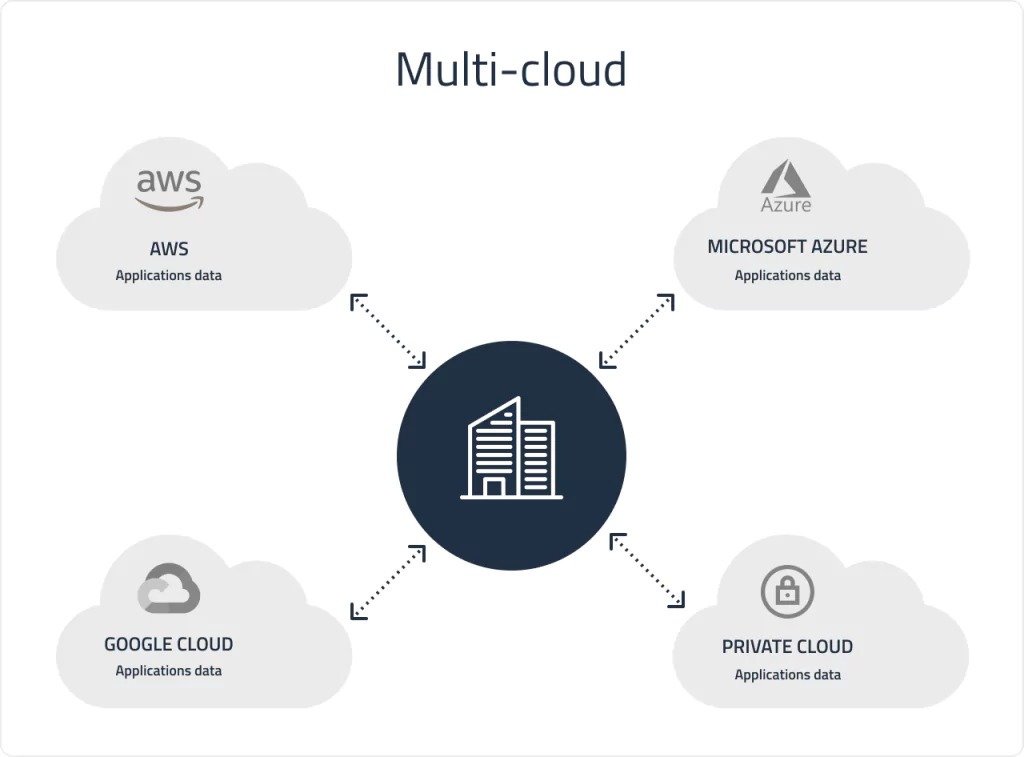
Multi-cloud means more than just “we use some AWS and some Azure.” In a proper design, you intentionally run workloads across more than one public cloud provider and decide which work goes where.
For fleet operations, that often means something like this:
- AWS IoT Core handling device identity, secure MQTT ingestion from edge gateways, and routing events into a streaming pipeline.
- Azure IoT Hub feeding data into Microsoft-centric environments where the customer already runs Power BI, Azure Synapse, or a big Azure AD tenant.
- Google Cloud IoT or successor patterns on Google Cloud for feeding data into BigQuery, Vertex AI, and custom ML models for routing, fuel optimization, or maintenance prediction.
Instead of “AWS is master, others are backup,” true multi-cloud fleet management splits workloads by capability, region, regulation, or even per-customer preference. One customer’s fleet might live mainly in Azure while your own internal analytics run in AWS or GCP.
Typical Multi-Cloud Fleet Patterns
Over the years you see the same patterns show up in real deployments. The more serious the platform, the more deliberate these look.
- Provider-by-region: You choose the cloud with the strongest presence and best latency for a given geography. Maybe Azure wins in a specific European country, AWS is strongest in North America for your fleet, and GCP has the closest edge locations for parts of APAC.
- Provider-by-function: One cloud does the heavy lifting on ingestion and streaming, another does analytics. A common split is AWS IoT Core and managed Kafka for ingestion, GCP for ML and route optimization, and Azure Synapse wired into the customer’s enterprise reporting stack.
- Customer-isolation pattern: Large enterprise customers insist, “We’re an Azure shop” or “Our IT policy is AWS only.” You pin them to their chosen provider. Your internal systems, shared services, and cross-customer analytics might live elsewhere, but their data processing happens in their cloud of choice.
Benefits of Multi-Cloud for Fleet Data
Done right, multi-cloud gives you real advantages that matter at fleet scale, not just shiny diagrams.
- Vendor lock-in avoidance: By leaning on Kubernetes-based fleet workloads, standard APIs, and portable data formats, you keep your options open. If one provider’s pricing or roadmap turns ugly, you’ve got room to maneuver.
- Best-of-breed services: Different clouds have different strengths. You might like one provider’s managed Kafka, another’s data lake for fleet analytics, and a third’s IoT stack or GPU offerings. Multi-cloud lets you pick the best tool for each piece instead of settling.
- Regulatory flexibility: Not every provider has a compliant region in every country. If you need in-country hosting in parts of MENA or other tight jurisdictions, having more than one cloud to choose from is often the only way to stay compliant.
- Resilience and DR: Instead of all your eggs in one basket, you can design disaster recovery across clouds. If a major issue hits one provider or region, you have a path to keep core services running elsewhere.
- Pricing leverage: Cloud bills at fleet scale are serious money. If your architecture already runs on multiple providers, you can negotiate more aggressively and shift new workloads if pricing or discounts change.
Costs and Trade-Offs of Multi-Cloud
None of that comes free. Multi-cloud adds weight, especially for streaming, data-heavy telematics systems.
- Operational overhead: You now own two or three IAM models, monitoring stacks, logging pipelines, and security baselines. Keeping all of them in sync takes discipline and solid platform engineering.
- Egress cost optimization: Moving data between clouds is where people get surprised. Streaming from AWS into GCP or copying datasets back and forth racks up egress costs. At high volume, poorly planned cross-cloud flows can cost more than all your compute.
- Latency implications: Every time your data hops across providers or distant regions, latency goes up. That might be fine for nightly analytics, but it can break real-time alerts like crash detection or geofence violations if you don’t design for regional colocation.
- Skillset fragmentation: Your team now needs to be fluent in AWS, Azure, and GCP, plus shared tooling like Terraform multi-cloud. Training and hiring to that level is not trivial.
Key Building Blocks in a Multi-Cloud Fleet Architecture
The multi-cloud fleets that scale well tend to standardize a few core components instead of letting every cloud build things its own way.
- Data ingestion pipeline: Use the cloud-native IoT services (AWS IoT Core, Azure IoT Hub) at the edge of each provider, then feed everything into a message broker fleet layer such as Apache Kafka. Whether managed or self-hosted, each cloud gets a consistent ingestion story.
- Real-time streaming: Kafka topics or similar pub/sub systems carry telemetry into downstream consumers. That might drive real-time alerting, geospatial processing, or serverless telemetry processing with Lambda, Azure Functions, or Cloud Functions, all reading the same logical event format.
- Time-series database: Use a multi-cloud friendly TSDB like an InfluxDB time-series cluster for your high-cardinality signals. Storing RPM, fuel rate, battery SOC, and environmental measurements across months or years is exactly where a TSDB shines.
- Kubernetes fleet orchestration: Standardize on Kubernetes as your runtime, whether that’s EKS, AKS, GKE, or self-managed clusters. That gives you consistent deployment, scaling, and observability across providers, instead of rewriting app logic per cloud.
- API gateway fleet layer: Present vendor-neutral REST or GraphQL APIs defined with OpenAPI. Cloud-native API gateways can sit behind that, but your contracts stay portable so your customers and internal tools don’t care which cloud is serving their requests.
Hybrid Cloud Architecture for Fleet Operations
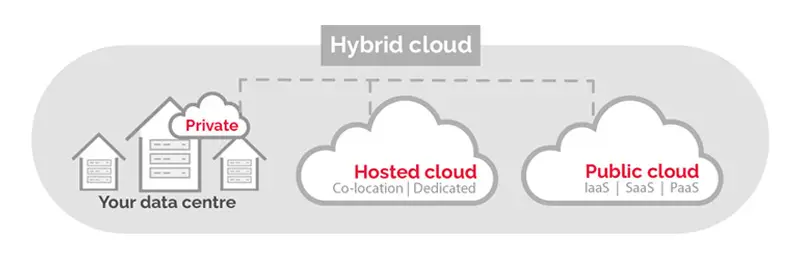
Hybrid cloud is what you get when you admit that not everything belongs in the public cloud all the time. You mix on-premises or edge compute with cloud services to match how fleets actually operate on the ground.
In fleet environments, “on-prem” is rarely a traditional corporate server room only. It usually looks like:
- Ruggedized compute in depots or yards handling video uploads, camera-based yard automation, or high-bandwidth data from EV chargers and stationary sensors.
- Enterprise data centers running older TMS, WMS, ERP, or payroll systems that the business is not ready to move, but still need live telematics data.
- OEM or integrator infrastructure where contracts, IP, or regulatory rules demand that certain data stays under direct physical control.
The public cloud then acts like the extension bay. It gives you burst capacity for analytics, large-scale hot-warm-cold storage tiering, integration with SaaS tools, and shared services for things like authentication and global dashboards.
Why Hybrid Cloud Fits Fleet Operations
Fleets don’t live in perfect coverage maps. They live on job sites, mine roads, port terminals, and remote highways. Hybrid cloud lines up well with that messy reality.
- Low-latency decisions: If you need split-second collision alerts, automatic gate operations, or live driver coaching in a yard, sending every decision to a distant cloud region is asking for trouble. Local processing handles what can’t wait.
- Bandwidth efficiency: Raw camera feeds and high-frequency CAN logs are huge. Pre-aggregating or compressing that data in the depot before it ever leaves the site keeps cloud bills sane and avoids hammering limited backhaul links.
- Legacy integration: Many fleets run old but business-critical TMS or dispatch tools on-prem. Hybrid lets you bridge these into a cloud architecture for fleet telematics without ripping and replacing systems that dispatchers depend on daily.
- Data residency: In places like the UAE or India, regulations or contracts may demand that customer data never leaves national soil. Hybrid models let you store and process sensitive info locally while still tapping global clouds for aggregated analytics.
Hybrid Cloud Data Pipeline for Fleets
A typical hybrid flow for connected vehicles looks like this in practice:
- Vehicles send telemetry to edge gateways in the cab or to depot servers over cellular, DSRC, or Wi‑Fi when they come home.
- Local edge systems run first-pass validation, enrichment, and event detection. You can see how this works in more detail in the guide on edge AI reduces cloud load.
- Only filtered events, summaries, and relevant time-series slices travel up to the cloud, usually over VPNs or private tunnels with strict network policies.
- In the cloud, the data flows through managed Kafka or a similar streaming backbone, then fans out into a data lake for fleet analytics plus one or more time-series stores and feature stores.
Even if your on-prem side is just a modest edge cluster or rugged gateway, that’s still a hybrid cloud connected vehicles architecture. The key difference from pure cloud is that important decisions and buffering happen locally when the network isn’t guaranteed.
Benefits and Challenges of Hybrid Cloud
Benefits:
- Latency and resilience: Local decisioning keeps safety and operations running even with spotty connectivity. Trucks don’t stop just because your cloud region had a blip.
- Compliance: You can store raw video, biometrics, or high-risk driver identifiers on-prem and only send masked or aggregated data to the cloud. That makes regulators and privacy teams more comfortable.
- Gradual migration: Instead of a risky all-at-once move, you can wrap legacy systems, pipe data into the cloud, and modernize one piece at a time while operations continue.
Challenges:
- Operational complexity: You’re now running infrastructure in depots or data centers as well as in the cloud. Patching, security, monitoring, and incident response all become two-sided.
- Capital vs. operational expenditure: On-prem gear hits you as capex and needs scheduled replacement, spare parts, and physical support. Public cloud shifts that to opex but doesn’t remove the work entirely.
- Standardization: If you don’t line up tooling, you end up with separate processes for on-prem and cloud. Using the same deployment, monitoring, and config stack, like Kubernetes on-prem plus in cloud, keeps you from doubling your workload.
Multi-Cloud vs Hybrid Cloud: Fleet-Specific Comparison Table
Multi-cloud and hybrid cloud often overlap. Many serious fleets use both at once. The table below puts the two models side by side for fleet data infrastructure cloud decision-making.
| Dimension | Multi-Cloud (Multiple Public Clouds) | Hybrid Cloud (On-Prem/Edge + Cloud) |
|---|---|---|
| Primary Goal | Avoid vendor lock-in, tap the best service from each provider, and boost overall resilience | Blend local control and low latency with elastic cloud scale and managed services |
| Latency for Real-Time Alerts | Strong if workloads are co-located within a region and provider. Cross-cloud traffic can slow down alerts. | Excellent for depot and yard use cases, and keeps working during outages through local decisioning. |
| Cost at Fleet Scale | Risk of high egress and duplicated tooling, but you can cherry-pick the most cost-effective storage and compute. | On-prem hardware increases capex, though smart local aggregation reduces cloud network and storage costs. |
| Data Sovereignty & Compliance | High flexibility. You choose providers with in-country regions and tune cross-region replication carefully. | Very strong. You keep regulated data in-country or on-prem and offload non-sensitive workloads to cloud. |
| Vendor Lock-In Risk | Lower, as long as you standardize on portable tech like Kubernetes, Kafka, Terraform, and neutral APIs. | Moderate. You might be tied to certain hardware vendors and still depend heavily on one primary cloud. |
| Operational Complexity | High. Multiple clouds mean more IAM designs, more security baselines, and more monitoring to wire up. | High. You operate edge or data center environments plus cloud, and you own connectivity and updates. |
| Disaster Recovery | Strong. You can shift or recreate key workloads in another cloud during prolonged outages. | Possible to fail over in either direction, but DR designs are more custom and depend on each site. |
| Best Fit: Fleet Size | Mid-size to very large fleets, and telematics platforms serving many large enterprise customers. | Mid-size to enterprise fleets with physical depots, strict IT policies, or strong on-prem investments. |
| Best Fit: Geography | Global fleets spread across regions with different cloud footprints and legal requirements. | Fleets with concentrated local operations or tight in-country residency or security rules. |
Data Sovereignty and Residency for Global Fleets (UAE, EU, India)

Once your fleet crosses borders, fleet data sovereignty cloud decisions stop being theoretical. Regulators care about where a driver’s location and identity data lives, not just how many trucks you operate.
Rules like GDPR, UAE data residency regulation, and India’s DPDP Act define what counts as personal data, where it is allowed to sit, and how it’s permitted to travel between countries. They also influence your choice of cloud regions and providers.
To keep your life manageable, you usually want a cross-region replication strategy that separates two things:
- Identifiable driver and vehicle data such as names, license plates, VINs tied to specific contracts, and driver IDs subject to strict residency or privacy laws.
- Operational telemetry such as de-identified GPS traces, sensor values, and aggregated KPIs that are less sensitive once decoupled from identity.
Multi-cloud and hybrid cloud both help here, but they do it in different ways and are often combined to fully satisfy local law and enterprise policy.
UAE & GCC Data Residency
Across the GCC, governments have tightened expectations on how citizen and critical infrastructure data is handled. Data residency UAE regulation-style policies are becoming the norm, not the edge case.
For fleets running in the UAE, Saudi Arabia, and neighboring markets, you should be thinking about:
- In-country regions: Confirm that at least one cloud provider offers a UAE or nearby GCC region that’s accepted by regulators and your largest customers. Some sectors expect local zones or government-approved clouds.
- Segregated workloads:
- Keep driver identity, contract data, and logs required by transport law inside UAE or GCC facilities.
- Send only de-identified, aggregated telemetry to broader global regions for large-scale analytics and ML.
- Hybrid models: Many operators stand up on-prem edge clusters inside local data centers or even customer premises. Sensitive data lands there, while the cloud region, ideally in-country, handles scalable analytics and integrations.
- Multi-cloud for coverage: If one major provider has no suitable MENA presence or comes with contractual limits, multi-cloud lets you pick a different cloud for local processing while still consuming another provider’s services for central analytics.
EU GDPR Compliance
The General Data Protection Regulation (GDPR) is very clear that driver and employee data is personal data, even in a commercial fleet setting. Failing to design for it is asking for trouble later.
For fleet data infrastructure, GDPR means:
- Lawful basis and minimization: You only stream and store telemetry that you truly need for safety, compliance, or operations. You document whether you rely on legitimate interest, consent, or another legal basis and avoid collecting “just in case” data.
- Data localization and cross-border rules:
- Make sure identifiable personal data for EU drivers and staff sits in EU regions of AWS, Azure, or Google Cloud.
- Use safeguards like Standard Contractual Clauses and strong encryption if you move data outside the EEA, such as for central analytics.
- Right to access and erasure: Design your time-series and data lake layers so you can actually find a single driver’s data, export it, or delete it across multiple systems and clouds when asked.
- Logging and auditability: Keep verifiable logs showing who accessed which personal data and why, particularly where you monitor driver behavior or performance.
From a cloud design point of view, multi-cloud lets you isolate EU workloads in dedicated EU regions and keep them separate from non-EU datasets. Hybrid can layer on top of that by letting very sensitive EU data remain on-prem, while anonymized subsets power cloud analytics.
India DPDP Act
India’s Digital Personal Data Protection (DPDP) Act sets rules for how personal data of Indian drivers, dispatchers, and customers is collected, stored, and shared. It replaces older, stricter localization proposals with a more flexible model, but don’t assume that means you can relax.
For fleet and telematics platforms, that means:
- Data localization nuance: While the law itself is more open, your contracts, tenders, or sector-specific rules may still require in-country storage of personal and vehicle data. Many public and large private customers will insist on it.
- Purpose limitation and consent: You need clear purposes for tracking, behavior analysis, and safety monitoring, plus workable flows to communicate those purposes and manage consent or opt-outs.
- Cross-border transfers: Track exactly which workloads process Indian personal data and where they run. If you export data for analytics or ML training in other regions, document and secure those flows.
Multi-cloud makes it easier to pick a cloud provider with strong India-region options and the right compliance posture. Hybrid cloud takes that a step further by letting you keep sensitive data in Indian data centers with only de-identified streams heading to global analytics platforms.
How Resolute Dynamics Architects Fleet Data Infrastructure
Resolute Dynamics has leaned into an edge-first, cloud-portable approach from day one. That means their stack is built to handle multi-cloud and hybrid cloud patterns without redesigning the whole thing each time a customer adds another country or regulatory twist.
Edge-First Processing with Capture
On the vehicle and depot side, Resolute’s Capture components handle the messy front end. That includes physical connectivity, protocol translation, cleaning up raw CAN and OBD frames, and shaping telematics into consistent, usable streams.
The important bit for your cloud bill is this:
- Only high-value events, filtered signals, and smartly aggregated time-series data get pushed up to the cloud. Noise and redundant chatter get trimmed at the edge.
- By doing that, you slash egress cost, shrink your long-term cloud storage footprint, and make both multi-cloud and hybrid models financially sustainable even as your vehicle count climbs.
If you want to go deeper into how that edge pipeline is wired, the guide on how edge AI reduces cloud load walks through the architecture step by step.
Multi-Region, Multi-Cloud Deployment with Connect
Resolute Dynamics Connect cloud acts as the shared data plane. It handles ingestion, streaming, time-series storage, and integration work. Under the hood, it’s engineered to run across many regions and more than one public cloud, and also to plug into hybrid scenarios.
- IoT ingestion: Connect talks natively to AWS IoT Core, Azure IoT Hub, and Google Cloud IoT style entry points. Customers can point devices at their preferred provider, while Connect normalizes what comes out the other side.
- Streaming backbone: An Apache Kafka-based real-time backbone gives consistent semantics no matter which cloud is in play. That’s critical for live alerts and serverless telemetry processing functions, which depend on predictable event order and replay.
- Time-series storage: InfluxDB time-series clusters hold the high-frequency telemetry. Connect keeps “hot” data close to operational regions for fast queries, then pushes “warm” and “cold” data into cheaper storage classes, possibly in the same or another cloud.
- Container orchestration: Kubernetes fleet orchestration drives Connect’s microservices. Whether the cluster runs on EKS, AKS, GKE, or an on-prem distribution, the deployment story stays the same, which is exactly what you want for cloud portability.
- Infra-as-code: With Terraform multi-cloud modules, network, security, and data services are defined once and rolled out across providers and regions. That cuts down on drift and lets teams bring new regions online quickly when the fleet expands.
API-First Integration with Control
On top of Connect, Resolute’s Control layer offers an API-first architecture for fleet management platforms and partners. This is what your TMS, ERP, customer-facing portals, and mobile apps actually interact with.
- A unified API gateway fleet layers over the various clouds and regions, giving third-party systems a single, predictable API surface rather than exposing underlying provider-specific endpoints.
- Both REST and streaming APIs revolve around real-world fleet concepts such as vehicle, trip, asset, alert, and driver, not low-level cloud schemas. That makes integrations more stable over time.
- For operational workloads like OTA delivery from cloud or V2X cloud integration, Control coordinates what needs to happen. Connect handles the heavy data plane underneath.
This clear split means you can adjust which cloud or region powers a given set of vehicles or customers without forcing downstream consumers to touch their integration code.
Data Residency Compliance Across 20+ Countries
Resolute Dynamics has had to design for a patchwork of residency rules from the start, so the platform bakes that into its topology instead of treating it as an afterthought.
- Per-region data planes: Separate Connect deployments in the EU, MENA (including the UAE), India, and other key regions ensure that regulated, identifiable data never crosses a border it’s not supposed to.
- Cross-region analytics: Aggregated and anonymized telemetry can be carefully replicated into global data lakes, where fleet-wide analytics and ML training run without leaking personal or contract-sensitive information.
- Policy-enforced routing: Ingestion routes are decided at the policy level, based on vehicle origin, customer rules, and local law. An Indian or UAE fleet can be locked to in-country resources while still contributing anonymized insights to global reporting.
Because the platform is both multi-cloud-capable and hybrid-aware, you don’t have to build a completely new system every time you enter a new jurisdiction with strict rules.
Common Mistakes When Choosing Multi-Cloud vs Hybrid (and How to Fix Them)
Most teams learn these lessons the hard way. You can shortcut a lot of pain by recognizing these patterns before you stamp your first production architecture.
Mistake 1: Starting with Cloud Provider, Not Requirements
One mistake I see constantly is teams walking in saying, “We’re an AWS fleet” or “Our company standard is Azure” before they’ve mapped out what they actually need. That mindset almost guarantees ugly compromises later.
Fix: Begin with a workload and geography matrix. Be explicit:
- Which workloads are latency critical, like real-time safety alerts, and which are batch, like quarterly analytics?
- Where do your fleets run: EU, UAE, India, North America, APAC, or all of the above?
- What enterprise systems are already in place, such as entrenched Azure AD, SAP on-prem, or big Oracle databases?
Once you understand that landscape, you can decide where hybrid cloud pays off and where multi-cloud gives you leverage. Picking a provider should come near the end of that process, not at the start.
Mistake 2: Ignoring Egress and Cross-Region Costs
The second trap is underestimating egress cost optimization. Bandwidth between clouds and regions is not free. If you stream raw telemetry or duplicate time-series data into multiple regions just because it’s convenient, your bill will spike.
Fix:
- Try to keep ingestion, primary storage, and first-line analytics in the same cloud region. Every extra hop should have a clear reason.
- Use edge aggregation so your data extraction feeds cloud with what you actually need, not every redundant sample forever.
- Reserve cross-cloud replication for rolled-up, compressed datasets used for centralized reporting, ML feature stores, or executive views, not for the entire raw feed.
Mistake 3: Over-Using Proprietary PaaS Services
It’s tempting to lean on every fancy managed service your chosen cloud offers: custom rule engines, proprietary event formats, one-off analytics services. Those are all nice until you try to move or add another provider.
Fix:
- Standardize on portable building blocks where you can: Kafka for streaming, Kubernetes for orchestration, InfluxDB for time-series, Terraform for infra definitions.
- Wrap provider-specific features behind your own internal abstraction layers. That way, if you decide to change clouds for a given workload, you mainly update configuration and adapters instead of rewriting core business logic.
Mistake 4: Treating All Telemetry as “Hot” Data
Another common issue is keeping every GPS ping and CAN frame in the most expensive, low-latency storage forever. You end up paying premium prices for data you rarely touch after a few weeks.
Fix: Put a clear hot-warm-cold storage tiering policy in place:
- Hot: Hours or days of data in fast time-series DBs and caches for live dashboards, alerting, and near-real-time analytics.
- Warm: Weeks or months of data in moderately priced storage so operations, safety, and compliance teams can run investigations and reporting.
- Cold: Long-term archives in object storage, possibly in cheaper regions that still respect residency laws, used mainly for audits, backtesting, or rare deep dives.
Mistake 5: Ignoring Edge and On-Prem Constraints
Some teams design like every truck is always on perfect 5G and depots have unlimited, low-latency fiber. Then they deploy to real-world routes and watch things fall over as soon as connectivity dips.
Fix:
- Think hybrid even if your plan is “cloud-first.” Make sure gateways and depots can buffer, do small amounts of local processing, and fail safely if they’re cut off from the cloud.
- For cloud-to-edge flows like OTA delivery from cloud or cloud-managed calibration parameters, design them so they can resume cleanly after outages and don’t assume permanent connectivity.
FAQ: Multi-Cloud vs Hybrid Cloud for Fleet Data
Below are straight answers to the questions fleet operators and telematics teams ask most often once they start sketching out their cloud strategy.
Is multi-cloud or hybrid cloud cheaper for fleet data?
Neither is automatically cheaper. Hybrid cloud can save on bandwidth and storage by aggregating data locally and sending less to the cloud, but you pay for hardware and on-site operations. Multi-cloud lets you cherry-pick cheaper or better services per provider, though cross-cloud egress and duplicated tooling can hit your budget. The most cost-effective setups tend to use hybrid for bandwidth and latency gains, then apply multi-cloud selectively for analytics, ML, and regulatory coverage.
Which is better for avoiding vendor lock-in: multi-cloud or hybrid?
If your goal is to avoid getting trapped by a single cloud vendor, multi-cloud is the stronger play. Running the same workload on more than one provider gives you actual leverage. You only get the benefit, though, if you stick to portable components like Kubernetes, Kafka, and Terraform. Hybrid helps you avoid relying purely on cloud versus on-prem, but it doesn’t automatically protect you from favoring one provider too heavily.
How complex is it to migrate an existing fleet telematics platform to multi-cloud?
Migrating a single-cloud telematics platform into a true multi-cloud setup is a project, not a weekend task. Complexity depends heavily on how deep you went into provider-specific IoT rules engines, streaming services, or databases. A practical path is to standardize on open-source or portable components first, introduce Terraform to manage infra as code, then gradually move services and data into the second cloud while keeping interfaces stable for customers.
How do multi-cloud and hybrid approaches handle data sovereignty?
Multi-cloud lets you choose per-country providers and regions that match laws like GDPR, UAE data residency rules, or India’s DPDP Act. You pin workloads for each jurisdiction to compliant regions. Hybrid cloud lets you place highly sensitive data in local or on-prem environments while sending anonymized or aggregated data to regional or global clouds. Most global fleets end up blending both, running hybrid in strict jurisdictions and multi-cloud for cross-border analytics and shared services.
Which architecture suits a small fleet vs an enterprise telematics provider?
Smaller fleets usually do well with a single-cloud + light hybrid pattern. That means one public cloud for most workloads plus some edge buffering or depot processing. Enterprise telematics platforms serving multiple big customers almost always lean into multi-cloud so they can align with customer preferences and policies, and hybrid to support depot operations, OEM requirements, and regional residency mandates. The more countries and large customers you add, the more flexible your architecture needs to be.
Can I use both multi-cloud and hybrid cloud at the same time for fleet data?
Yes, and that’s exactly what many mature platforms do. You end up with a hybrid-multi-cloud design: edge gateways or depot clusters on-prem feeding into two or more public clouds. You might run local processing at depots (hybrid), send EU data into AWS, UAE data into Azure, and then let Google Cloud handle cross-fleet analytics. The trick is keeping your data model, observability, and tooling consistent so the system behaves like a single platform, not three unrelated projects.
How do I decide which fleet workloads run where?
Classify everything by latency sensitivity, data sensitivity, integration needs, and cost profile. Here’s how that usually shakes out:
- Real-time safety events, driver feedback, and yard automation often run at the edge or on-prem, synced to cloud when possible.
- Batch analytics, historical performance reviews, and ML training sit nicely in regional cloud data lakes.
- Regulatory reporting may require in-country storage but can still use cloud dashboards and reporting engines.
Use that classification to decide which workloads belong on which edge, which data center, and which specific cloud region.
What role do time-series databases and data lakes play in the strategy?
A time-series database like InfluxDB handles the firehose of recent telemetry. It lets you ask things like “show me all brake-pressure anomalies for this asset in the last week” without waiting an hour. A data lake for fleet analytics in S3, Azure Data Lake Storage, or Google Cloud Storage holds richer history, derived features, and large training datasets for ML. Your multi-cloud and hybrid strategy decides which clouds host these layers, how many copies you keep, and how you replicate data across regions without blowing up cost or violating residency rules.
Final Summary: Choosing the Right Cloud Strategy for Fleet Data
Fleet telematics is inherently messy. You’ve got vehicles crossing borders, regulations that shift by region, and data volumes that grow every month. There isn’t a single perfect answer where you pick multi-cloud or hybrid cloud once and never touch the design again.
- Hybrid cloud will likely handle your depots, yards, and latency-critical workflows, and help you satisfy strict residency or legacy integration needs.
- Multi-cloud gives you room to align with customer preferences, plug into the best regional coverage, match local regulations, and avoid being boxed in by one vendor.
- Portable building blocks like Kubernetes, Kafka, InfluxDB, and Terraform keep your architecture flexible as your fleet grows and spreads out.
- A disciplined approach to egress cost optimization and hot-warm-cold tiering keeps your cloud spend under control as you move from pilots to full production at fleet scale.
If you are planning or reworking your cloud architecture for fleet telematics, partnering with a platform that already solves multi-region deployment, sovereignty handling, and cloud portability will save you a lot of trial and error. Resolute Dynamics Connect cloud is designed for exactly those constraints, combining edge-first pipelines, multi-cloud rollout, and policy-driven residency logic.
Next step: Lay out your workloads end to end, from raw ingestion through analytics, OTA, and V2X, across each active and target region. Then design a target state where hybrid and multi-cloud each do the jobs they’re good at, instead of forcing everything into a single cloud or a single pattern just because it’s familiar.